
Funding & Resources
Live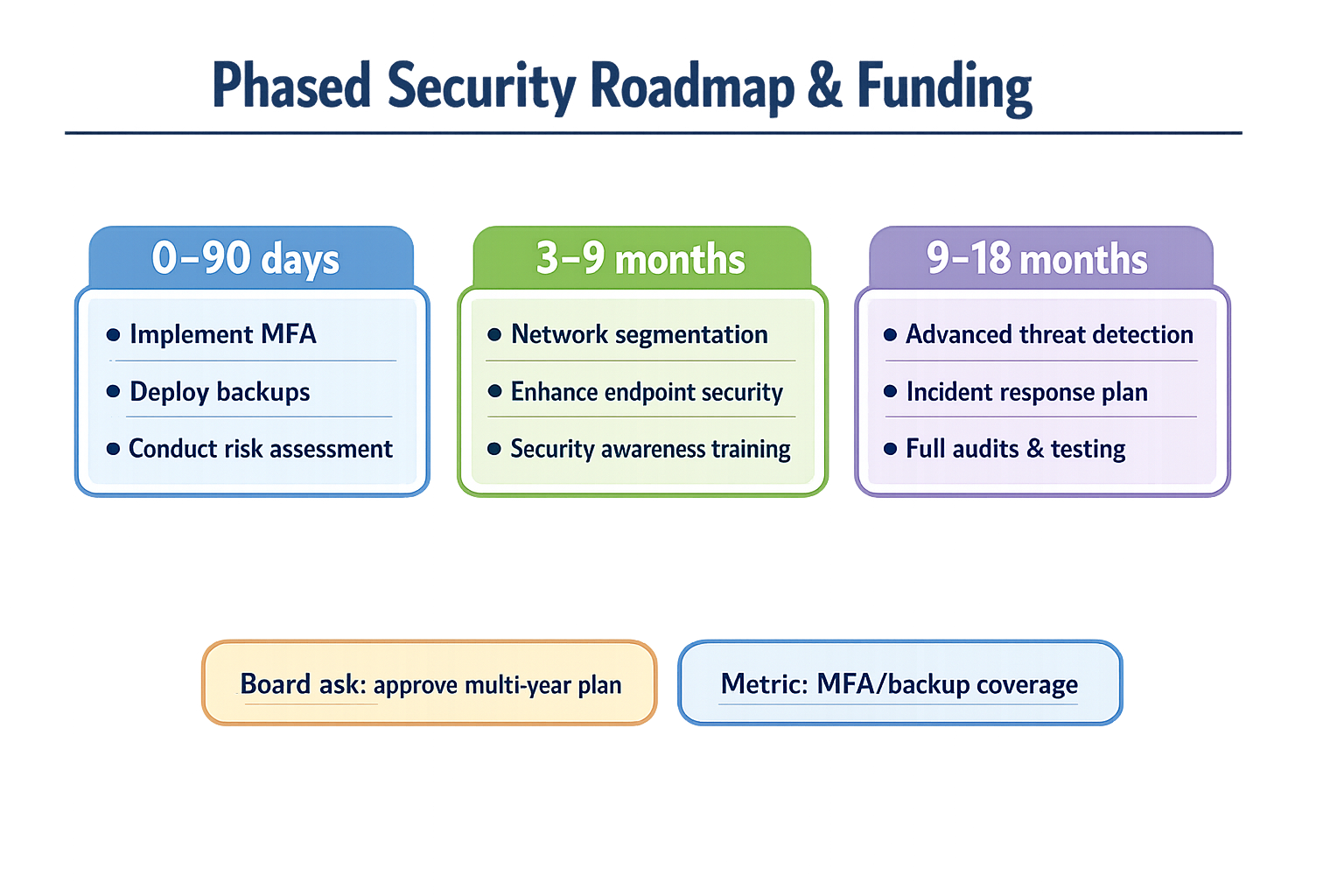
Connect cybersecurity priorities to realistic funding sources, grant strategy, and district planning.
Applied practice: The Funding Match-Up
Match cybersecurity initiatives to an appropriate local, E-Rate, state, or grant-funded path.
Topics in this Lesson
Chapter 20: Funding & Resources
Securing adequate funding for cybersecurity initiatives remains one of the most significant challenges facing K-12 districts. While the need for robust cybersecurity protection has never been greater, many districts struggle to allocate sufficient resources against competing educational priorities. However, a variety of funding sources and resource optimization strategies can help districts build effective cybersecurity programs regardless of their budget constraints.
“E-rate has been essential for our cybersecurity infrastructure,” notes Caroline Lightfoot, Director of Technology at Dickinson ISD. “We’ve been able to implement robust network security measures that would have been impossible with our limited budget.”
This chapter provides strategies for funding cybersecurity regardless of district size, from leveraging federal programs to creative partnerships and grant opportunities.
Framework visual: Funding & Resources roadmap
Figure: Three-phase funding strip with board ask and coverage metric for quick approval conversations.
Rubric Checkpoint
NIST CSF Function: GOVERN
Rubric Domain: Oversight, Risk Management Strategy
NIST CSF 2.0 Categories:
| Category | Code | Outcome |
|---|---|---|
| Risk Management Strategy | GV.RM | Funding aligned with security priorities and risk tolerance |
| Oversight | GV.OV | Resource allocation monitored for effectiveness |
| Organizational Context | GV.OC | Funding strategy reflects district constraints and opportunities |
Sustainable cybersecurity requires sustainable funding. The Rubric evaluates whether your resource strategy supports long-term security goals.
Key Maturity Indicators:
- Level 2: Cybersecurity funded from general IT budget
- Level 3: Dedicated security budget line item
- Level 4: Multi-year funding plan; grant/E-Rate optimization
- Level 5: Dynamic funding tied to risk assessment priorities
Assessment Tip: The Rubric considers funding as part of governance. “We don’t have budget” is a governance failure, not an excuse. This chapter helps you find resources regardless of district size.
The K-12 Funding Challenge
Budget Constraints and Competing Priorities
K-12 districts face unique funding challenges that differ fundamentally from other sectors. Unlike corporations that can allocate dedicated cybersecurity budgets, school districts must balance cybersecurity needs against competing educational priorities in an environment of limited resources and increasing demands.
Most district budgets are allocated to core educational functions: teacher salaries, classroom resources, and essential educational programs. Cybersecurity initiatives must compete for the limited discretionary funding that remains after these core needs are met.
Staffing Limitations Compound the Challenge
The contrast between a Massachusetts district with 24,000 students and 11 IT staff, and Dickinson ISD with 2,500 students and just 3 IT staff, illustrates the dramatic variations in resources across districts. These varying district sizes create dramatically different funding needs and capabilities, requiring tailored approaches to cybersecurity funding.
Regulatory Requirements Create Both Challenges and Opportunities
FERPA compliance requirements create a legal mandate for cybersecurity investment. State-specific regulations add complexity to the compliance landscape. CIPA compliance requirements create eligibility requirements for E-Rate funding, creating a direct connection between compliance and funding opportunities.
E-Rate Program
The E-rate program provides critical funding for telecommunications and information services in K-12 schools. While not specifically designed for cybersecurity, E-rate funding can support many security-related initiatives.
Category 1 Services
Category 1 covers telecommunications and internet access:
- High-speed internet connections with security features
- Wide area networks with secure connections
- Firewall services that protect network infrastructure
- Content filtering services (CIPA compliance)
Category 2 Services
Category 2 focuses on internal connections and basic maintenance:
- Network security appliances (firewalls, intrusion detection)
- Wireless access points with security features
- Managed switches with security capabilities
- Basic maintenance for eligible equipment
Strategic E-Rate Planning
Long-Term Perspective:
- Five-year planning cycles aligned with technology plans
- Phased implementation across multiple funding years
- Technology refresh planning for regular equipment replacement
- Budget optimization to maximize discounts
Compliance Requirements:
- CIPA compliance through internet safety policies and content filtering
- Documentation of E-Rate purchases and usage
- Audit preparation and ongoing compliance
- Policy development for funding eligibility
Maximizing E-Rate Benefits
Discount Optimization:
- Accurate reporting of free and reduced lunch data
- Consortium participation for increased purchasing power
- Competitive bidding for best pricing
- Including eligible professional development
Category 2 Management:
- Careful management across five-year cycles
- Equipment planning to maximize benefits
- Including maintenance and support in requests
- Technology integration with existing security infrastructure
Federal Grant Programs
ESSER Funds
The Elementary and Secondary School Emergency Relief (ESSER) program provides significant funding for technology and cybersecurity initiatives:
Eligible Uses:
- Technology infrastructure including network security
- Professional development for cybersecurity training
- Student data protection systems
- Remote learning security measures
Key Success Factors:
- Demonstrate clear need aligned with educational objectives
- Document impact on student learning
- Emphasize regulatory compliance and risk mitigation
“ESSER funding has been a game-changer for our cybersecurity initiatives,” notes Dana Castine. “We’ve been able to implement comprehensive security measures that protect our students and staff while supporting our educational mission.”
CISA Grants
CISA offers various grant programs supporting K-12 cybersecurity:
State and Local Cybersecurity Grant Program:
- Funding for cybersecurity planning, assessment, and implementation
- Eligibility extends to state and local governments including school districts
- Multi-year funding available
School Safety Grant Programs:
- Comprehensive school safety funding including cybersecurity
- Technology integration support
- Training and awareness programs
Department of Education Programs
Education Innovation and Research (EIR) Program:
- Supports innovative approaches including cybersecurity
- Research component for effective practices
- Scalability across districts
Supporting Effective Educator Development (SEED) Program:
- Professional development and capacity building
- Cybersecurity training for educators
- Best practice sharing
State and Regional Funding
State Technology Programs
Many states offer dedicated technology funding supporting cybersecurity:
Common Support Areas:
- Network security and infrastructure
- Professional development for cybersecurity training
- Security hardware and software
- Consulting services for planning and implementation
“State partnerships have been crucial for our cybersecurity program,” says Mark Parsons of Inter-Lakes School District. “Through New Hampshire’s MCDP program, we’ve been able to access training, resources, and support that would have been beyond our reach otherwise. These partnerships make cybersecurity achievable for small districts like ours.”
Regional Educational Service Agencies
RESAs often provide cybersecurity services and funding support:
Shared Services:
- Cybersecurity consulting and expert guidance
- Regional training initiatives
- Consortium purchasing for better pricing
- Shared technical expertise
Grant Administration Support:
- Assistance with applications
- Regulatory compliance support
- Coordination of resources
- Knowledge sharing facilitation
Private Foundation and Corporate Funding
Technology Company Programs
Many technology companies offer grant programs for K-12 cybersecurity:
Microsoft Education Grants:
- Technology donations
- Training programs
- Innovation grants
- Partnership programs
Google for Education:
- Chromebooks and Google Workspace
- Built-in security features
- Professional development materials
- Innovation support
Other Technology Partners:
- Cisco Networking Academy
- Intel Education
- Dell Technologies
- HP Education
Cybersecurity Company Programs
Security Awareness Programs:
- Free training for students and staff
- Educational resources and curriculum
- Competition support
- Mentorship programs
Technology Donations:
- Donated or discounted security software
- Security hardware and equipment
- Pro bono consulting services
- Professional development programs
Voices from the Field
Caroline Lightfoot, Director of Technology, Dickinson ISD
“E-rate has been essential for our cybersecurity infrastructure. We’ve been able to implement robust network security measures that would have been impossible with our limited budget. The key is careful planning and making sure every purchase aligns with both our security needs and E-rate requirements.”
Mark Parsons, Director of Technology, Inter-Lakes School District
“State partnerships have been crucial for our cybersecurity program. Through New Hampshire’s MCDP program, we’ve been able to access training, resources, and support that would have been beyond our reach otherwise. These partnerships make cybersecurity achievable for small districts like ours.”
Parsons also emphasizes strategic E-Rate planning: “E-Rate strategic planning has been essential for our cybersecurity funding. We’ve learned to integrate security components into our E-Rate applications, which has allowed us to fund network security infrastructure that we otherwise couldn’t afford. The key is careful planning and making sure every purchase aligns with both our security needs and E-Rate requirements.”
Dana Castine, Technology Director, Florida Union Free School District
“ESSER funding has been a game-changer for our cybersecurity initiatives. We’ve been able to implement comprehensive security measures that protect our students and staff while supporting our educational mission. The key is demonstrating how cybersecurity investments directly support student learning and safety.”
Creative Funding Strategies
Resource Optimization
Phased Implementation:
- Implement based on risk and impact
- Spread investments over multiple years
- Test solutions before full deployment
- Use early successes to justify additional funding
Shared Services and Consortia:
- Collaborate with neighboring districts
- Pool resources for better pricing
- Share cybersecurity expertise
- Collaborate on training and development
Vendor Partnerships:
- Pilot programs to test solutions
- Educational pricing negotiations
- Value-added services
- Long-term relationship discounts
Alternative Funding Sources
Community Partnerships:
- Partner with local technology companies
- Engage parent-teacher organizations
- Apply for local foundation grants
- Leverage volunteer expertise
Student and Staff Programs:
- Student cybersecurity clubs
- Staff development investments
- Internship programs with colleges
- Mentorship with industry professionals
Grant Writing Strategies
Effective Grant Writing
Research and Preparation:
- Understand grant requirements and priorities
- Clearly articulate cybersecurity needs
- Align proposals with program objectives
- Involve key stakeholders in development
Proposal Development:
- Specific, measurable objectives
- Detailed, comprehensive budgets
- Realistic implementation timelines
- Methods for measuring success
Submission and Follow-up:
- Complete applications with all materials
- Professional presentation
- Timely submission before deadlines
- Follow-up communication
Grant Management
Compliance and Reporting:
- Ensure regulatory compliance
- Maintain accurate financial records
- Track progress toward objectives
- Measure and report impact
Sustainability Planning:
- Long-term planning beyond grant funding
- Integrate initiatives into ongoing operations
- Document successes for future requests
- Build partnerships for ongoing support
Implementation Roadmap
Phase 1: Assessment and Planning (0-3 months)
Current State Analysis:
- Evaluate current cybersecurity funding
- Identify specific needs and priorities
- Conduct gap analysis
- Engage stakeholders in planning
Funding Strategy Development:
- Identify potential funding sources
- Prioritize based on likelihood and impact
- Develop application timelines
- Allocate resources for grant writing
Phase 2: Application and Implementation (3-12 months)
Grant Applications:
- Develop comprehensive proposals
- Submit to identified funding sources
- Maintain funder communication
- Manage awarded grants
Implementation Planning:
- Detailed plans for funded projects
- Coordinate resources and personnel
- Manage timelines and milestones
- Ensure quality implementation
Phase 3: Optimization and Sustainability (12-24 months)
Performance Monitoring:
- Measure and document impact
- Document successes and lessons
- Communicate results to stakeholders
- Identify improvement opportunities
Sustainability Planning:
- Plan for long-term funding
- Develop ongoing partnerships
- Share knowledge with other districts
- Plan for future funding needs
The Path Forward
Securing adequate funding for K-12 cybersecurity initiatives requires creativity, persistence, and strategic thinking. While funding challenges are real, numerous opportunities exist for districts to build effective cybersecurity programs through a combination of federal, state, local, and private funding sources.
The key to success lies in:
- Understanding available funding sources
- Developing compelling proposals aligned with funder priorities
- Implementing funded initiatives effectively
- Building sustainable funding relationships
- Sharing successes to justify continued investment
With the right approach, any district can secure the funding needed to build effective cybersecurity programs that protect students and staff while supporting their educational missions.
What Your Boss Should Know
The Bottom Line: Grant management requires meaningful staff time but unlocks significant external funding, substantially reducing local budget burden.
Board Decisions Required:
- Balance funding strategy across E-Rate, federal grants, state programs, and private sources
- Dedicate internal staff or hire grant writing specialists
- Leverage regional collaborations to improve funding competitiveness
What Success Looks Like:
- Successful grant awards funding multi-year security improvements
- Significant reduction in local cybersecurity budget burden
- Sustained funding relationships for ongoing improvements
Why It’s Worth It: One successful grant funds multiple years of improvements that would otherwise strain local budgets.