
7. Stories We Tell Ourselves
Live
Most of the time, we don’t even realize we’re telling ourselves stories. A student misses a deadline. A friend doesn’t text back. A colleague looks distracted in a meeting. Without thinking, we jump to conclusions: “They don’t care,” “They’re upset with me,” “I must have done something wrong.” These interpretations feel like facts—but they’re not.
This lesson is about the subtle but powerful narratives that shape our lives. The stories we tell ourselves can trap us—or free us. It all depends on whether we’re aware they’re stories to begin with.
Why It Matters
We often react to what we believe is true. But much of the time, what we believe is shaped by a story. When we treat that story as unquestionable truth, we lose flexibility. We defend instead of explore. We react instead of reflect.
The power comes when we learn to tell the difference. Once we can distinguish a story from reality, we open up new possibilities—and reclaim our ability to choose.
? Introduction & Learning Goals
In this lesson, you’ll learn:
- How stories form in the brain—and why they often feel like truth
- How to recognize when you’re caught in a story or a script
- What makes a story “bad” or unhelpful
- Simple ways to shift from automatic reactions to intentional responses
You’ll explore real-life examples of stories in action and build the skills to rewrite unhelpful narratives before they become habits.
Topics in this Lesson
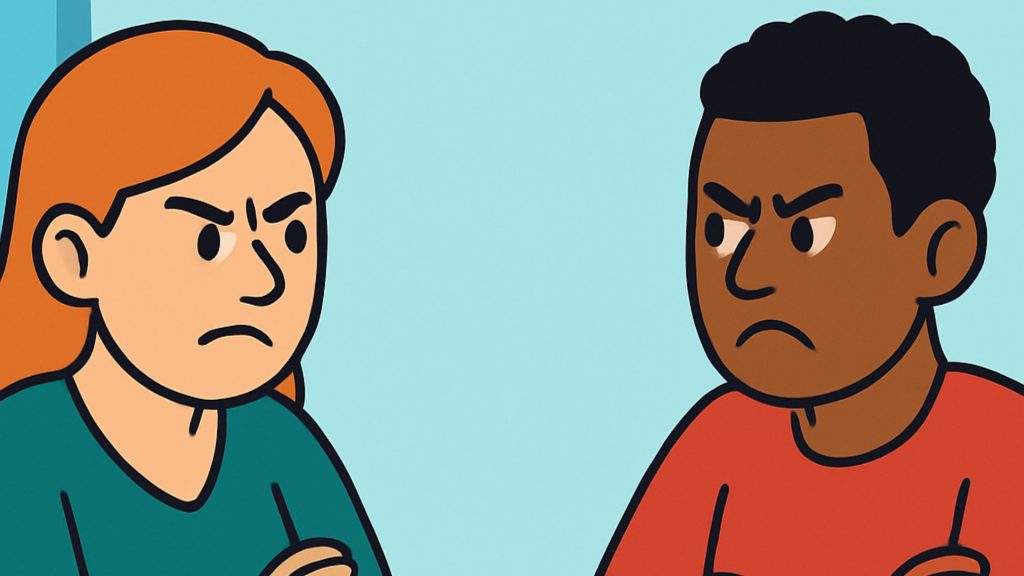
Most of the time, you don’t realize when you’re inside a story. That’s because it doesn’t feel like a story—it feels like reality.
Our brains are wired to make meaning fast. The moment something happens, we interpret it automatically. We assign a cause, a motive, a meaning. That interpretation becomes our story. And once we have it, we act on it—often without questioning whether it’s actually true.
Stories Feel Like Truth—Even When They Aren’t
Let’s say a student doesn’t hand in an assignment. A teacher might think:
“They don’t care.”
“They’re disrespectful.”
“They’re always behind.”
“It’s okay, they are normally diligent.”
None of those are facts. They’re stories—created to explain the event. But they feel like facts. And that’s where the risk begins.
The moment we believe a story is the reality, we stop being curious. We don’t ask why. We just react.
Stories Become Scripts
Once the story locks in, our behavior follows. We’ve seen this before in previous lesson:
Story → Action → Defense.
When you act from a story, it’s like reading from a script. Your next move is already written.
Here are some examples of how two people can tell very different stories about the same situation—and how those stories shape their actions:
| Example A | Example B |
| Story: “My boss is criticizing me because they don’t appreciate me.” Script: You stop sharing ideas at meetings. | Story: “My boss is criticizing me because they are trying to bring out the best in me.” Script: You try harder to come up with new ideas. |
| Story: “This child is difficult.” Script: You approach them with tension before they even speak. | Story: “This child is not difficult, they are just having a bad day.” Script: You approach them with empathy before they even speak. |
| Story: “They didn’t answer my email because they’re ignoring me.” Script: You send multiple follow-ups and feel rejected. | Story: “They’re probably just busy.” Script: You wait and send a polite reminder later. |
| Story: “I’m too old to learn this new system.” Script: You avoid the training and feel frustrated. | Story: “This is a chance to grow.” Script: You sign up for help and give it a try. |
We don’t do this on purpose. We do it automatically—because it saves cognitive energy and it’s fast. But it costs us clarity.
The Signs You’re in a Story or Script
So how can you tell?
- You are 100% certain of what you believe.
- Your thoughts feel emotionally charged, absolute, or urgent.
- You notice you’ve had the same inner dialogue many times before.
- You act quickly—and then justify afterward.
- You feel defensive when someone challenges your perspective.
If these are showing up, chances are, you’re operating from a story—not objective reality.
? Key Takeaways
- Most of the time, we don’t realize we’re inside a story—it feels like the truth.
- Stories form rapidly in response to events and shape how we act.
- Once internalized, stories become scripts—default reactions we don’t question.
- Recognizing you’re in a story opens the possibility for reflection, curiosity, and change.
A script is something you do automatically; a story is something you tell yourself. Sort each item into the right box to lock in the difference.
Scripts are automatic actions; stories are the narratives that explain or predict. Telling them apart is the first step to changing either one.
Interactive Activity

A story is a mental shortcut. It organizes what’s happening into a cause-and-effect sequence, even if that sequence isn’t accurate. And once a story forms, it can be incredibly sticky—especially if it confirms something we already believe about ourselves or others.
Signs That You’re in a Bad Story
Bad stories often sound like truth—but they’re actually shaped by old fears, assumptions, or pain.
If you notice one or more of the emotional signs below and one or more of the thinking patterns that follow, chances are, you’re caught in a story that isn’t helpful.
Emotional Signs:
- You feel small, stuck, or defeated
→ “I’ll never get this right.” - You feel certain, but reactive or defensive
→ “They probably think I’m useless.”
Cognitive Patterns:
- You assume the worst intentions in others
→ “They didn’t reply. They must be mad at me.” - You repeat old beliefs that no longer help you
→ “I’m always the one who has to fix everything.” - You make it about yourself—even when it might not be
→ “They were quiet. Did I do something wrong?” - You generalize in a way that triggers fight, flight, or freeze—and makes you feel small
→ “I made a mistake—I’m clearly not cut out for this.”
Individually, these moments can pass. But when they stack together, they form a story that keeps you from seeing the bigger picture—or from seeing yourself clearly.
Real-Life Examples of Bad Stories (and What Happened Next)
Let’s look at a few real-life reflections from learners who recognized a bad story forming—and found a way to shift their mindset.
? Planning the School Musical
“I was planning next year’s school musical and caught myself spiraling: What if the students don’t like it? What if admin says no? What if nothing works?
Then I asked myself: How will I feel at the end if it all goes well? That helped me calm down and get excited again.”
? Selling a House
“We countered an offer on our house—then a neighbor listed a better one. The buyer backed off. I felt angry and said things I regretted.
After a moment, I thought: They’re making a big purchase. Of course they want to consider all options. That helped me calm down and communicate more clearly.”
?️ Triggered in Conversation
“Someone said something I deeply disagreed with. I noticed my tone, posture, and volume rising. I saw others noticing too.
I paused, ended the conversation calmly, and left the room. It wasn’t perfect—but I didn’t make things worse.”
? Frustrated with a Colleague
“I was explaining something and they weren’t getting it. I thought: Why do I always have to do this? They’re so slow.
I remembered to shift into Sage mind. I got curious, asked better questions, and stayed calm. They caught on quickly—and I felt more connected.”
Each bad story carries emotional urgency and certainty. You react quickly, then justify afterward. You feel defensive, rigid, trapped. These are the signs that a story is not helpful—even if it feels deeply true.
The most dangerous thing about bad stories is that they feel like reality. You act on them without questioning. But once you recognize a story as a story—not as the truth—you regain the power to pause, reflect, and rewrite.
? Interactive Exercise: How to Recognize a Bad Story
Instructions: Read each question and choose the answer that best reflects how to identify when you—or someone else—might be caught in an unhelpful internal story. Pay close attention to the emotional tone and thinking patterns. Noticing these signals is the first step toward rewriting the story.
? Key Takeaways
- Bad stories are often emotionally charged shortcuts—not objective truth.
- They frequently come from our Saboteurs or Part X, which aim to protect us—but often keep us stuck.
- You can recognize them by their emotional tone, exaggerated logic, or recurring patterns.
- Naming a bad story helps loosen its grip and opens the door to rewrite it.
Our brains are wired to make meaning—fast. The stories we create help us make sense of the world, but they can also limit us when left unquestioned. In this lesson, you discovered how stories form, how they morph into scripts, and how to identify when a story might be holding you back. You also learned to contrast helpful and unhelpful interpretations of everyday moments—and how that contrast can shift your emotional state and your actions.
? Key Takeaways
- Stories are not facts. They are interpretations—often shaped by past fears or assumptions.
- When you’re in a story, you may feel emotionally certain, reactive, or defensive. And we may not even realize we are in a story, but we now have 5 questions to ask ourselves.
- Recognizing that you’re in a bad story gives you the power to pause, question it, and choose a different response.
- Even a small shift in narrative can create a meaningful change in your behavior and experience.
Next Steps in MindShifting
Now that you’ve learned how to recognize the stories and scripts that shape your reactions, it’s time to explore what comes next: how to change them. In the upcoming lesson, you’ll learn what happens when you begin to question those internal narratives—and how even small shifts in perspective can lead to radically different outcomes.
This is where MindShifting becomes truly powerful: not just seeing the story, but choosing to write a better one.