
5. The Prefrontal Cortex
Live
Welcome to our exploration of the prefrontal cortex (PFC)—the reflective, strategic, and imaginative part of your brain. If the limbic system is your emotional fast-response team, the PFC is your wise, long-game coach. This lesson focuses on how to activate your PFC more often, recognize when it’s offline, and keep it engaged when you need it most.
You don’t need a neuroscience degree to spot when you’re reacting from habit versus responding with thoughtfulness—the goal here is practical and immediately useful.
Why This Matters:
- More Conscious Choices: Act from reflection rather than reflex. MindShifting is the art of noticing which part of your brain is in charge.
- Better Emotional Regulation: Respond to challenges with empathy and flexibility.
Self-Observation Prompts
In this lesson, tune in to moments when your brain takes over before you really think.
Consider:
- When am I acting from autopilot or strong emotion?
- When do I feel myself using my PFC proactively—planning, empathizing, or pausing to reflect?
- When do I catch myself using my PFC to rationalize a reaction I already had? (e.g., “I yelled because they deserved it.”)
Social Observation (With Care!)
Watch others, too. See if you can spot when someone is:
- Reacting from habit or emotion
- Reflecting or course-correcting
- Rationalizing a reaction as if it was fully thought through
Caution: This is a reflection exercise, not an invitation to judge or correct others. You’re building awareness, not offering feedback—unless you’re a coach, therapist, or have a black belt in conflict resolution. Remember, the limbic brain is judgemental, the resourceful brain is curious. ?
? Introduction & Learning Goals
In this lesson, you’ll learn:
- Context: What the prefrontal cortex is and why it’s your greatest asset in navigating modern life’s complexity.
- Quick Recap: Understand how the brain’s natural reaction sequence works—limbic system first, PFC second—and how you can catch that process in real-time.
- The “9 Functions” of the PFC: Discover the skills your PFC enables, from critical thinking to empathy.
- Fear Hormone Cool-Down Techniques: Learn simple practices to reduce adrenaline and cortisol and bring your PFC back online.
- The PFC’s Double Role: See how it can guide you toward better decisions—or cleverly rationalize impulsive ones.
- Practical Tools and Exercises: Engage with reflection prompts and real-world applications to strengthen your PFC’s role.
The goal of this lesson isn’t perfection. It’s awareness. Every time you notice yourself about to act on impulse—and choose to pause—you’re practicing MindShifting. Every time you spot a rationalization and replace it with a better alternative, your Sage brain gets stronger.
By the end of this chapter, you’ll have a deeper understanding of how to recognize when your wise brain is in charge—and how to strengthen that leadership every day.
Topics in this Lesson
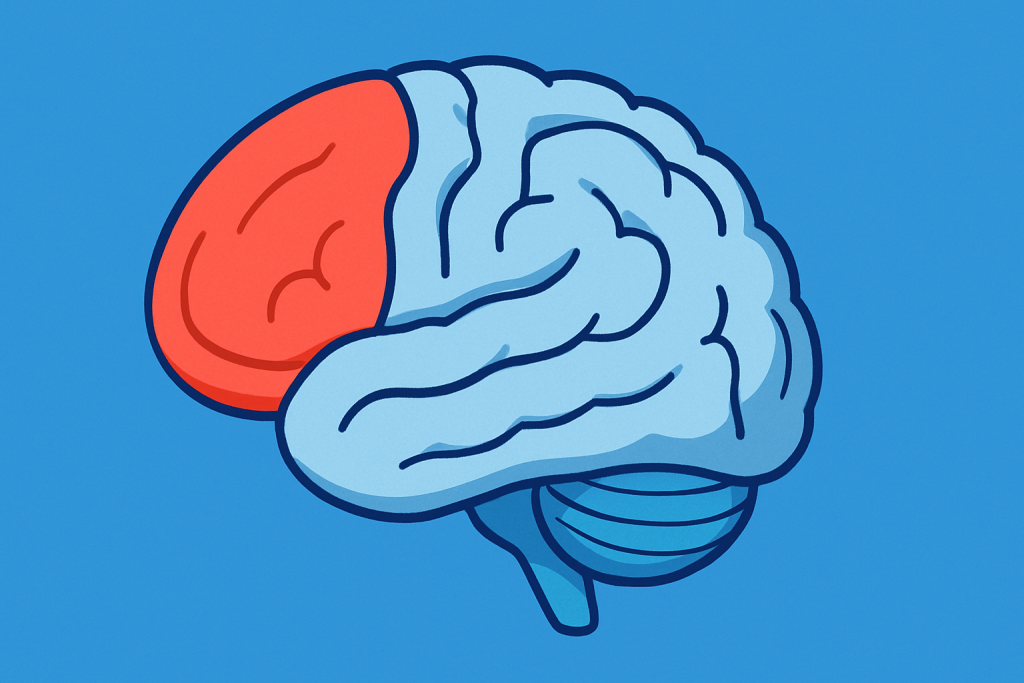
The prefrontal cortex (PFC) is part of the neocortex—the newest major region of the brain in evolutionary terms. The neocortex first appeared in mammals about 200 million years ago, but it started expanding with human predecessors called hominids who first appears about 6 million years ago. That’s a long time ago, but remember that the limbic system has a 500 million year legacy.
Slower but Smarter
Unlike the limbic system—which reacts in fractions of a second—the PFC typically kicks in 2–3 seconds after a situation is detected.
What the PFC Does Best
In MindShifting, the PFC is your Sage or Resourceful brain—the driver of:
- Critical thinking and strategic planning
- Creativity and flexibility
- Empathy and perspective-taking
- Self-regulation and emotional balance
These are part of the 9 functions we’ll explore shortly—capabilities that help you thrive in modern life where the challenges aren’t always about physical survival, but emotional, social, and intellectual complexity.
Biological Firepower
- The human PFC contains around 1.3 billion neurons, compared to about 137 million in great apes.
- That means greater connectivity, abstraction, and foresight—but only if it’s activated.
Hormones and the PFC
Your neurochemistry plays a huge role in whether the PFC comes online:
- Inhibitors: Cortisol and adrenaline (stress/fear hormones) can shut it down.
- Activators: Hormones like serotonin, dopamine, oxytocin, and endorphins can help it function optimally—supporting calm focus, connection, and motivation.
? Why It Matters for MindShifting
MindShifting is about noticing when the PFC is online—or being hijacked. When your emotional brain is reacting, the PFC can either join in (to justify the reaction), or step back and offer a wiser way forward.
The good news? With awareness and practice, you can train your brain to switch modes more often—and more effectively.
When the Limbic Brain Takes the Lead
- The Limbic System Usually Decides First: the limbic system wakes up in (less than) one tenth of a second and makes decisions in under a second. These are the fight, flight, freeze, habit, and mimicry actions.
- The PFC’s Default Role: once a limbic decision is in motion, the PFC by default simply rationalizes or defends that decision rather than questioning it.
- Challenging Limbic Decisions: If someone (or something) challenges that limbic reaction, the limbic brain feels threatened—stress hormones (adrenaline, cortisol) surge, often shutting down the PFC and invoking fight, flight, or freeze responses.
When the PFC Takes the Lead
- When the limbic system judges that there is no threat or stress in a situation: it emits happy hormones which activate the powers of the PFC
- When the PFC is activated: we generally feel curious and happy, even when we are working hard
Result: When the PFC is offline, we can’t analyze, self-regulate, or access the 9 higher functions.
Your prefrontal cortex (PFC) is like the wise CEO of your brain—making decisions that are thoughtful, creative, and emotionally intelligent. When it’s online, you’re at your best. When it’s shut down by fear or stress, it’s like the CEO leaves the building and the accountants shut down sales, marketing, and operations to save money.
The 9 Functions of the PFC
| Function | What It Means |
|---|---|
| Empathy | Understanding what others feel, even if they don’t say it out loud. |
| Insight (Self-Awareness) | Seeing your own patterns, emotions, and motivations clearly. |
| Emotional Regulation | Staying calm and steady instead of reacting impulsively. |
| Body Regulation | Managing heart rate, breathing, and physical tension through awareness. |
| Response Flexibility | Pausing before reacting; choosing the best action instead of going on autopilot. |
| Fear Modulation | Recognizing fear without letting it control you. |
| Intuition | Drawing on past experience and pattern recognition to make informed guesses. |
| Morality | Acting with fairness, integrity, and concern for others. |
| Attuned Communication | Listening deeply and responding in a way that matches the other person’s needs. |
What Shutdown Looks Like: When the PFC Goes Offline
Have you ever seen anyone make a bad decision and stick to it even with the evidence that they are wrong right in front of them?
Have you ever noticed someone who blew up at a comment, and when someone tried to explain to them that the comment was not meant as an insult or threat they just got angrier?
Have you ever seen anyone so convinced they couldn’t do something that they gave up without even trying, but you could see that they had all they needed and it really would not have been that difficult?
Those are all examples of what happens when the PFC shuts down.
Story Example

Adrianne was two years old and loved spending time at the beach. One thing she knew was that hot sand really burned, and her sandals were not much protection. Her parents took her to the beach one day at 9:00 in the morning, when the sand was still cool from the evening. Did that make a difference?
Nope. Adrianne went into full meltdown mode when her feet touched the sand. “It’s hot. It’s burning. Pick me up.” The cries didn’t stop until she was picked up and carried to the edge of the water.
We can laugh about it, but it’s a perfect example of PFC lockdown and it happens to all of us.
When stress hormones like cortisol flood the system, your PFC can go into temporary shutdown, and you might notice:
- Creativity disappears – You struggle to brainstorm or think outside the box.
- Self-regulation vanishes – You react emotionally, say things you regret, or shut down entirely.
- Openness fades – You ignore useful feedback or resist facts that contradict your emotions.
In short: You lose the best parts of your thinking right when you need them most.
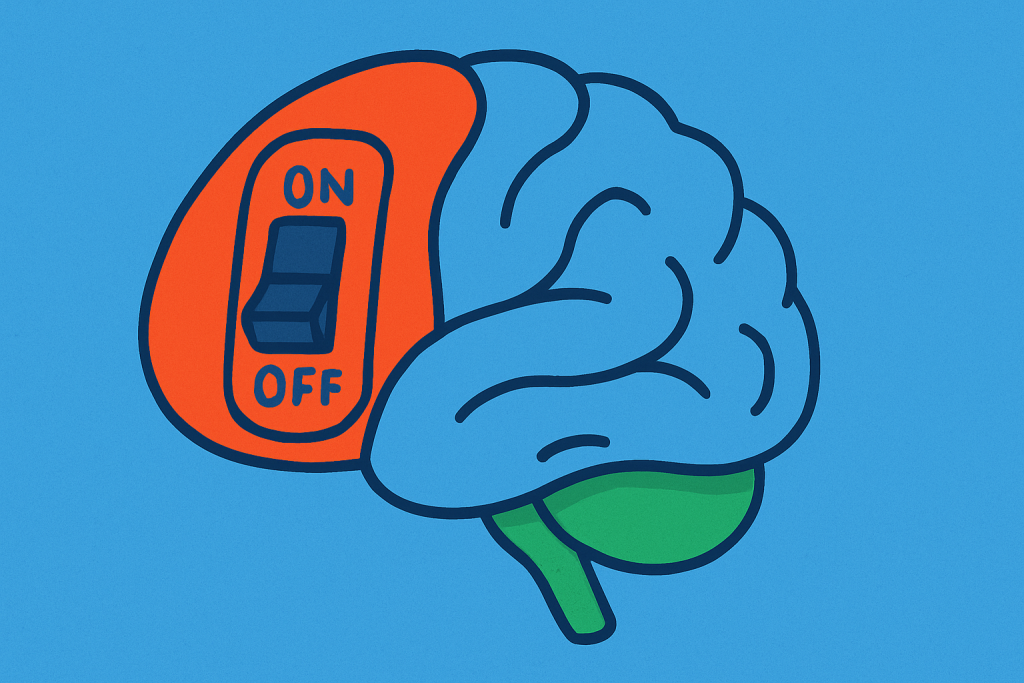
We’ve seen that the prefrontal cortex is inhibited by stress hormones, and those hormones are released through the limbic system whenever we perceive a threat or experience anger, fear, or anxiety.
We may want to be resourceful at those times. We may even think we are resourceful during those times. But the fact is, we can’t just turn on our PFC. We have to tone down our limbic system, and even before we do that we have to recognize that we are in limbic mode.
Only When the Limbic System Relaxes
- We can only regain full PFC capacity if the limbic system stops releasing fear hormones.
- This often requires a pause: taking a breath, removing ourselves from a perceived threat, or engaging in mindfulness techniques.
Hard to Recognize in Ourselves
- We can easily spot a coworker or friend in “limbic meltdown,” but it’s much harder to catch ourselves.
- Why? Because once adrenaline floods your system, you feel justified in your reaction. The PFC might defend the impulsive choice rather than question it.
? Interactive Exercise: “Is My PFC Online or Offline?”
Overview:
Read each mini-scenario and the character’s internal response.
Then choose the best match for their state of mind:
- ✅ PFC Online (Reflective, resourceful thinking)
- ❌ PFC Offline (Limbic override – emotional, reactive, or avoidant)
After each question, you’ll receive feedback explaining why the answer fits that mental state.
✅ “Great job completing the PFC awareness challenge!
Recognizing whether your thinking is reflective (PFC Online) or reactive (PFC Offline or Partially Engaged) is key to MindShifting. As you continue, keep asking yourself:
‘Am I truly thinking this through—or justifying my initial reaction?’“

Why We Justify Our Impulses
Once the limbic brain makes a fast emotional decision, the prefrontal cortex (PFC) often steps in—not to challenge it, but to defend it. Like a skilled internal lawyer, the PFC finds logical-sounding reasons to support the verdict the limbic system already reached.
This means:
- We double down on overreactions, instead of re-evaluating them.
- We defend habits or impulses we feel, even when they don’t serve us well.
- We dismiss alternatives, because they conflict with our initial reaction.
Why Feedback Feels Like a Threat
When someone says:
“Maybe you’re overreacting.”
“Calm down, it’s not a big deal.”
…it might sound reasonable. But to your limbic system, that sounds like a threat, or danger, or bad.
As a result:
- Adrenaline spikes.
- The PFC shuts down further.
- You dig in deeper instead of opening up.
This creates a cycle: emotional reaction → rationalization → threat → even less openness.
? Interactive Exercise: Spot the Rationalization
Practice identifying when you are truly reflecting, versus when your PFC is just rationalizing a limbic decision.
? Key Insights:
- The more threatened you feel, the less accessible your PFC becomes.
That’s why MindShifting begins with reducing fear and restoring calm—before offering new ideas or trying to reflect. - This is true not just for you, but for others as well.
If someone else is in limbic mode, giving feedback or advice won’t work—not because they don’t care, but because they literally can’t process it yet.
Try this:
Next time you catch yourself justifying a strong emotional reaction, pause and ask:
“Am I really reflecting—or just rationalizing what I already decided?”
The more you recognize which part of your brain is leading, the more control you gain over how you respond. Whether it’s your own reaction or someone else’s, recognizing when the PFC is “offline” helps you avoid escalating conflict, poor decisions, or rigid thinking.
? Key Takeaways:
- The prefrontal cortex (PFC) is where reflection, creativity, empathy, and self-regulation happen—but it takes a few seconds to activate.
- The limbic system, much older and faster, often reacts first. And once it does, the PFC can get pulled into justifying that reaction instead of evaluating it.
- When fear or stress hormones like adrenaline and cortisol are high, they can shut down your access to the PFC’s strengths—leaving you stuck in survival mode.
- You explored how to tell whether someone is in a reflective state or reacting automatically—and how easy it is to confuse rationalization with true insight.
Next Steps in MindShifting
In the next lesson, we’ll dive deeper into a specific survival reaction: freeze—that moment when you feel totally stuck or overwhelmed. You’ll learn why it happens, what it looks like in real life, and how to start gently shifting yourself (or others) out of it using MindShifting tools.