
6. The Freeze Reaction
Live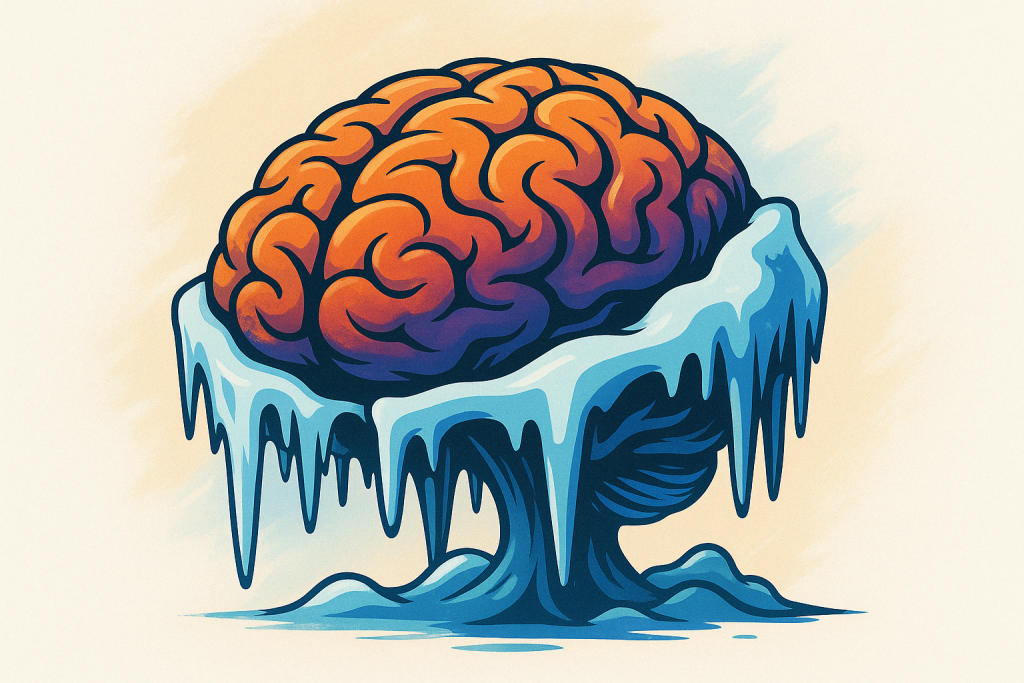
Welcome to this lesson on the Freeze Reaction, part of our exploration into handling our natural, instinctive responses in challenging situations. Have you ever been in a moment—perhaps speaking in front of an audience, during a heated discussion, or when faced with a critical decision—when you suddenly felt completely stuck, unable to act or even think clearly? This is what’s known as the freeze reaction.
In this lesson, we’ll explore what the freeze response really is, why it happens, and how it affects your brain’s ability to think, decide, and move forward. Understanding these mechanisms will help you manage the freeze reaction more effectively in your everyday life.
Why This Matters:
- Recognize Freeze Moments: Spot when you or others are slipping into a freeze state.
- Preserve Critical Thinking: Understand how freeze affects the prefrontal cortex and your ability to reason.
- Learn to Unfreeze: Lay the groundwork for learning techniques to shift out of freeze when it matters most.
? Introduction & Learning Goals
In this lesson, you’ll explore six key areas:
- Context: Set the stage by understanding how freeze evolved as a survival mechanism and how it shows up today.
- Understanding the Freeze Reaction: Learn what happens in your brain and body during a freeze moment, and how it manifests in everyday life.
- Freeze and the Prefrontal Cortex Shutdown: Discover how extreme stress can cause your prefrontal cortex—the rational, reflective part of your brain—to go offline.
- Exercise: Challenging Freeze — Helpful or Harmful?: Engage in an interactive exercise that helps you recognize whether the freeze response is constructive or counterproductive.
- AI Mentor / Simulation Exercise: Participate in a simulation with your AI mentor to practice recognizing and shifting out of the freeze response.
- Bringing It All Together: Summarize the key insights and set the stage for applying techniques to unfreeze and move forward in future lessons.
As we explore these topics, reflect on your patterns and triggers related to the freeze reaction. In real-time or post-scenario, consider how gentle, empathetic approaches versus direct confrontations affect your ability to move past being stuck. Your awareness and understanding will be crucial as we build upon these insights in upcoming lessons, where we’ll learn practical techniques to “unfreeze” and progress beyond initial paralysis.
By the end of this chapter, you’ll have a strong awareness of how freeze impacts you—and a foundation for mastering how to unstick yourself in critical moments.
Topics in this Lesson
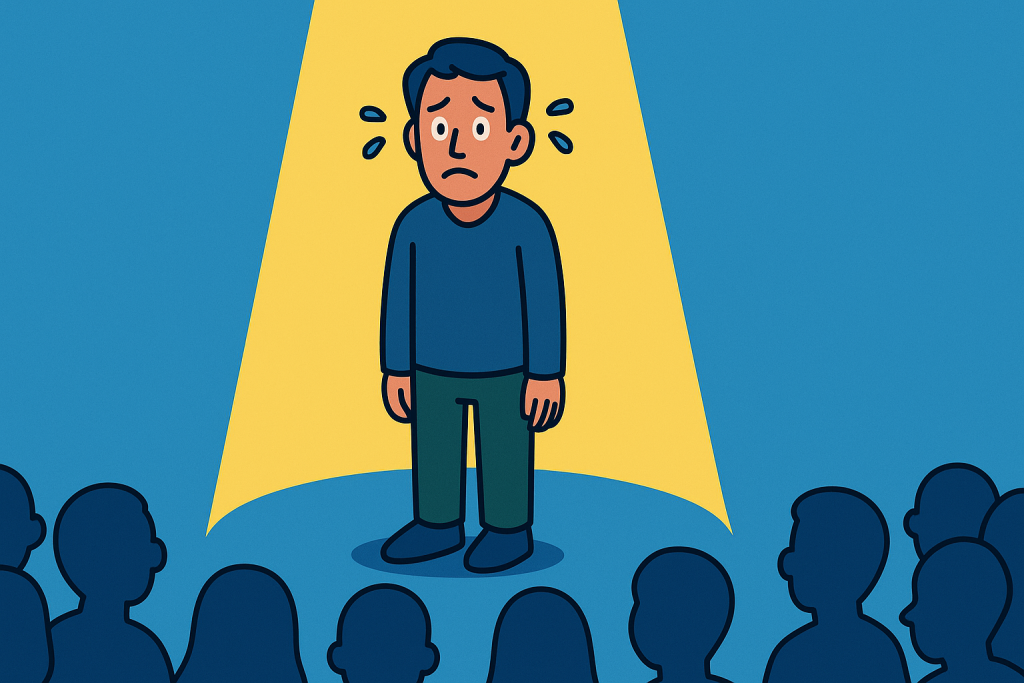
Have you ever found yourself in the spotlight—maybe at work, in class, or during a family argument—and suddenly felt completely stuck? You might have said, “I can’t do this,” or even gone silent without meaning to. This is freeze, one of our oldest survival instincts.
In the previous parts, you learned about the limbic system (the fast, emotional part of the brain) and the prefrontal cortex (PFC) (the slower, higher-order thinking region). Now, let’s zoom in on how freeze works:
- Why freeze is considered one of the earliest, simplest responses.
- How to recognize freeze in both ourselves and others.
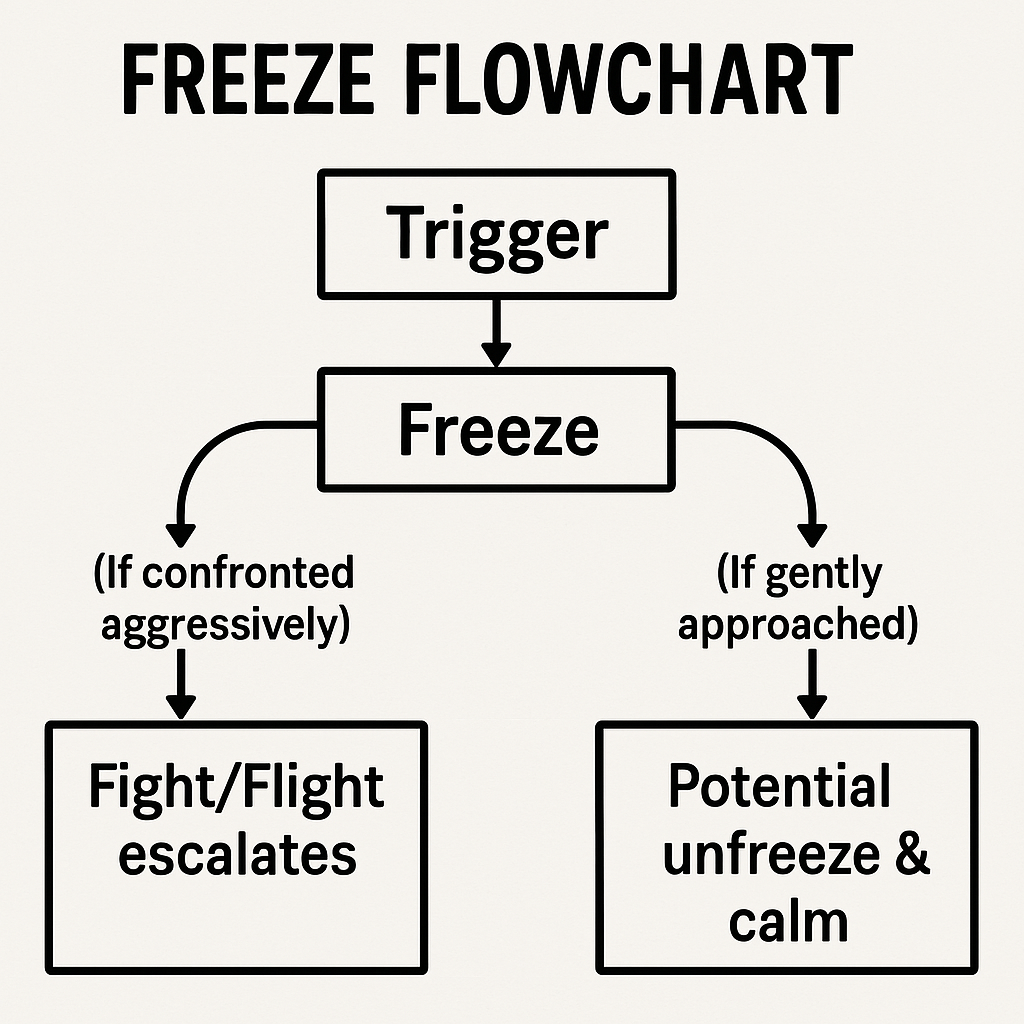
- What happens if freeze is challenged directly.
- How freeze shuts down our PFC and impacts our ability to think critically.
As we’ll see, freeze often manifests as “I can’t!”—a statement that stops all progress. But don’t worry; in the next part, we’ll tackle a simple yet powerful technique to unstick ourselves.
The Earliest Survival Reflex
- Evolutionary Origin
- The freeze response developed hundreds of millions of years ago.
- In the wild, an animal that goes motionless may avoid a predator’s notice especially if it has camouflage coloring to blend in.
- It’s also the first reaction a baby can make; startle a newborn, and you’ll likely see freeze.
- Modern-Day Freeze
- We might not face predators, but social and psychological stressors can trigger the same reflex.
- Examples: Stopping dead in a confrontation, going blank in a presentation, or repeatedly saying “I don’t know” under pressure.
- Procrastination is often a subtle form of freeze: the limbic brain decides, “Let’s just not deal with this now.”
Examples where freeze/procrastination helps and where it hurts:
Freeze/Procrastination Can Be Helpful:
- Buying Time for Better Planning: Pausing a moment before hitting “send” on an angry email can prevent escalation.
- Avoiding Immediate Danger: Staying motionless during a sudden threat (e.g., avoiding a car racing by) can keep you safe.
- Stress Relief: Taking a quick break when overwhelmed might let your emotions settle, so you can return calmer.
- Re-evaluating Priorities: Sometimes procrastinating a minor task helps you focus on something more urgent or critical.
Freeze/Procrastination Can Be Counterproductive:
- Missing Opportunities: Not speaking up in a meeting could mean someone else takes your idea forward.
- Delaying Key Decisions: Putting off job applications might cause you to miss application deadlines.
- Worsening Anxiety: Avoiding a tough conversation or project can increase dread over time.
- Lowered Self-Esteem: Constantly saying “I can’t” leads to believing you’re incapable, damaging confidence.
Recognizing Freeze
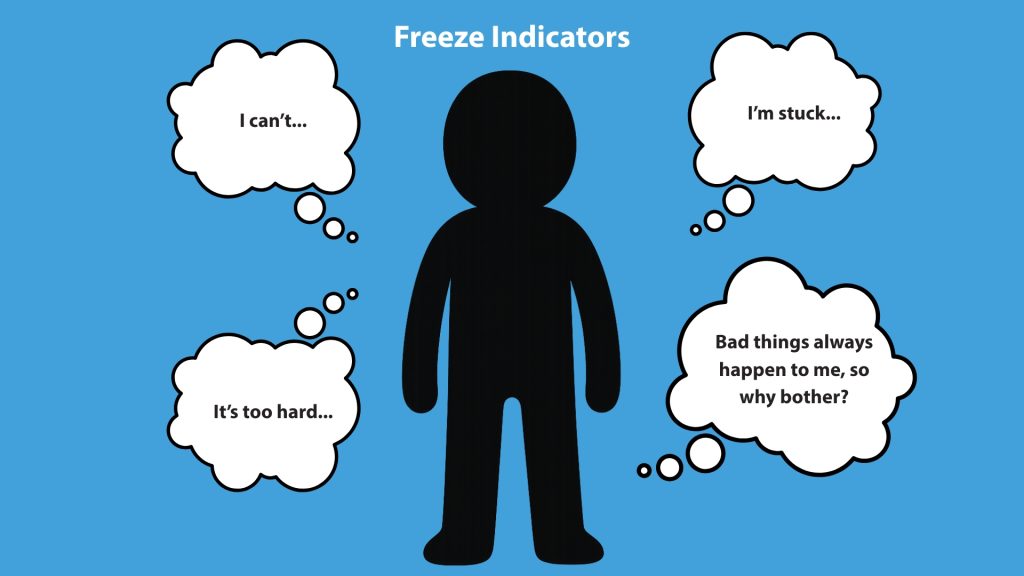
- Verbal Clues: “I can’t,” “I don’t know,” “Umm…,” or total silence.
- Physical Clues: Tense posture, rigid limbs, shallow or held breath, wide eyes.
- Emotional State: Overwhelm, mental blank, feeling powerless. Freeze is more the emotional state than the actual action. For example, a student is intimidated by math and decides to listen to music for doing the math homework. If the student is really listening to music to calm themselves that would be constructive, if they are listening to music as a way to merely avoid or postpone doing the math, it is a freeze or possibly flight reaction.
? Interactive Exercise
In this exercise, you’ll read scenarios and choose the response that best reflects the character’s mental state or shift. Your goal is to recognize whether the person is stuck in a reactive limbic response—like freeze, flight, or fight—or beginning to engage their prefrontal cortex (PFC), which supports thoughtful, resourceful action.
As you go, notice how small shifts in behavior or language can change the entire mindset.
Freeze rarely announces itself – it hides behind reasonable-sounding excuses. Click every phrase that is really a freeze rationalization, and leave the genuine action steps unmarked.
Naming a freeze rationalization for what it is – "that's just freeze talking" – is the first step back to your thinking brain.
Interactive Activity
Why Does Freeze Shut Down Our Best Thinking?
- It’s efficient: the three priorities of our limbic brain are to survival, reducing effort and energy, and fitting in with others. In freezing, we don’t have to think hard, our limbic brain has decided and we don’t have to use our prefrontal cortex to think about alternatives.
- It keeps us safer than doing something risky: There are certainly many, many things we could do that would make the situation worse, and freezing avoids those.
- We don’t stick out: when we freeze we become almost invisible, whereas if we struck out or fled, that might attract attention.
- Hormonal overload: Cortisol and adrenaline flood the body which shuts down the prefrontal cortex, while keeping us on high alert to whatever is causing our feelings of danger.
- PFC goes offline: The prefrontal cortex, responsible for logic and creativity, is inhibited so that the organism can focus on freezing during the immediate danger.
- The explanation feels true: reduced to merely supporting the freeze reaction, the prefrontal cortex generates a rationalization or story that we accept as the truth, and we don’t question it because our prefrontal cortex isn’t fully operational.
We can notice that in ourselves, and we can certainly notice it with others when they freeze.
Long-term or repeated freeze leads to missed opportunities, damaged self-confidence, and friction with people who don’t understand the freeze reaction.
Let’s spend some time contrasting resourceful responses from freeze ones in the next task.
? Interactive Exercise
Instructions: Learn how different ways of freeze responding to a situation can either escalate or defuse the stress. The focus is on self-talk for the first four scenarios (overcoming one’s own freeze) and supporting someone else for the fifth scenario.
After each scenario, you’ll see feedback based on your choice. It will help you understand whether your selected response:
- Keeps you in freeze — where you’re stuck, overwhelmed, or avoidant
- Moves you toward a sage mindset — where you’re calmly thinking, breaking things down, or taking small steps
You’ll also learn to spot the difference between:
- Limbic reactions (freeze, fight, avoid, give up)
- Prefrontal responses (pausing, planning, asking for help, or breaking the task into parts)
Each mini-scenario offers a real-life moment where you or someone else is frozen. Your goal is to start recognizing which responses unfreeze progress—and which ones keep you stuck.
Well done! You’ve now practiced how to recognize and respond to freeze situations—whether it’s your own self-talk or helping someone else. Next time you feel stuck, remember:
A small, thoughtful step is often all it takes to start moving again.
? AI Mentor Interaction: “Noticing and Navigating Freeze”
Goals
In this conversation, you’ll explore real or hypothetical experiences of the freeze reaction—either in yourself or someone else. You’ll reflect on what triggered the freeze, how it played out, and what might help shift from paralysis to action. This interaction is designed to help you recognize freeze more clearly and begin developing your capacity to respond to it with empathy and insight.
Instructions
Talk to Coach Robbi as if you were discussing a moment of difficulty with a coach. Describe a situation where freeze occurred—such as going blank in a meeting, avoiding a task, or seeing someone else shut down. You don’t have to solve it right away; just explore what happened, how it felt, and what might help shift the response next time.
This exercise has two parts. In the first, Coach Robbi will prompt you to identify and describe freeze situations. Then it will ask if you want to go to the second part, where it will explore how one might shift from the freeze reaction to a different response. If you are pressed for time, you can ask it to stop after the first part, although there is a lot of value to continuing. You can also come back and begin the interaction again. At any time during the interaction, you can tell the AI that you would like to summarize and then move on with the course.
Prompt: Think of a moment when you or someone you know froze in response to a challenge.
Question: What triggered the freeze, and what was said or done in the moment?
Action: Share what you wish had happened differently—and what kind of support or mindset might help next time.
? What You’ve Just Practiced
In this exercise, you practiced identifying and unpacking the freeze response. Through guided questioning, you explored how shifts in mindset—such as empathy, gentle questioning, or pausing—can begin to re-engage the prefrontal cortex.
We’ll be covering many more strategies for navigating unhelpful limbic reactions in future lessons. For now, celebrate the progress you’ve made in becoming more metacognitive and aware of your own (and others’) patterns.
In the live MindShifting: Mastering Your Resourceful Brain courses, participants have volunteered ways that they have discovered to help themselves become more resourceful when they feel like freezing or procrastinating.
Perhaps you can pick a few of these and try them out the next time you notice yourself freezing.
1. Grounding statements:
- “I am safe right now.”
- “This will pass.”
- “I can handle this.”
2. Action-oriented phrases:
- “Take one small step.”
- “Focus on what I can control.”
- “What’s the next right thing to do?”
3. Self-compassion:
- “It’s okay to feel this way.”
- “I’m doing the best I can.”
- “Be kind to yourself.”
4. Perspective-shifting:
- “How important will this be in a year?”
- “What would I tell a friend in this situation?”
- “This is temporary, not permanent.”
5. Empowering questions:
- “What can I learn from this?”
- “How can I grow through this?”
- “What resources do I have available?”
? Reflection Exercise
Go through the list above and pick out two possible responses.
Imagine a time when you feel stuck or even when you are procrastinating. Perhaps there is too much to do, the task is too difficult, or you just don’t want to start it.
Say those statements to yourself. Did anything change?
If nothing changed, go through the list again and imagine the same situation with a different statement. In most cases, at least one of the statements will nudge you toward resourcefulness.
You’ve now seen how the freeze reaction—one of our oldest survival instincts—still shows up today, sometimes in subtle but powerful ways. Whether it’s saying “I can’t,” endlessly delaying, distracting yourself, or thinking “bad things always happen, so what’s the point?”—these can all be modern versions of freeze.
Let’s pull together what we’ve explored and set you up for the next step in your MindShifting journey.
? Key Takeaways:
- Freeze is fast and ancient: It often shows up as hesitation, avoidance, blankness, or defeatist thoughts.
- It’s not always “I can’t”: Freeze can also sound like:
- “Not now”
- “It’s okay if I don’t do this”
- “Others aren’t doing it either”
- “It always goes badly, so why try?”
These thoughts feel true—but they’re often rationalizations from the PFC after a limbic shutdown.
- Direct confrontation usually backfires: Trying to force yourself (or someone else) out of freeze can trigger more fear and resistance.
- Stress stalls the PFC: High levels of adrenaline and cortisol make it harder to reflect, plan, or connect empathetically.
- Gentle steps work best: Empathy, curiosity, and small actions help re-engage the PFC and restore problem-solving capacity.
? Reflect & Apply: Your Personal Freeze Plan
Take a moment to think about how freeze might show up in your life.
Answer these short questions (you can write them down or reflect mentally):
- Recognizing Freeze
What signs—like certain thoughts, physical sensations, or behaviors—might help you notice when you’re frozen? - Understanding the Physiology
Knowing that stress hormones can shut down your creative brain, how does that change how you view your own freeze moments? - Planning a Gentle Shift
What’s one approach you’ll try when you (or someone else) seem stuck in freeze? For example: a small step, a curious question, or using a phrase like “Perhaps I can…” - Prepare for a Real Situation
Think of an upcoming moment where freeze might hit—maybe a tough conversation, a big task, or a stressful environment. How could you approach it differently this time? Perhaps you can use one or more of the statements or questions from the previous task.
Freeze doesn’t mean failure—it means your brain is trying to protect you. But once you recognize it, you can choose how to respond. That’s the heart of MindShifting.
By reflecting now, you’re already building your awareness—and that makes it more likely that next time, you’ll respond with thoughtfulness instead of just reacting.
Next Steps in MindShifting
In lesson 7, you’ll learn a simple but powerful phrase—“Perhaps I can”—that can gently loosen the grip of freeze. This approach helps you start moving forward, without setting off alarm bells in your nervous system.
You don’t need to force change. Just learn how to invite it—one small step at a time.