
8. Certainty, Perseverance, and Resourcefulness
Live
Welcome to our lesson on Certainty, Perseverance, and Resourcefulness. This lesson is designed to help you explore the delicate balance between determination and adaptability as key components of personal growth. By understanding these elements and how they interact, you can better navigate life’s challenges with a flexible mindset.
Why This Matters:
By the end of this lesson, you will be better equipped to:
- Spot where you or others fall on the Resourcefulness-Perseverance spectrum and understand how to move towards the ideal balance.
- Appreciate the role of “Perhaps I can” as a stepping stone for growth, inviting exploration and reducing the overwhelming burden of certainty.
- Recognize the value of viewing challenges through a lens that encourages both perseverance in pursuit of goals and resourcefulness in finding creative solutions.
? Introduction & Learning Goals
In this lesson, you’ll explore how your mindset influences your ability to stay committed, stay flexible, and find new ways forward. You’ll learn to:
- Understand the Impact of Mindset: Explore how “I can’t,” “Perhaps I can,” and “I know I can” influence your behavior and problem-solving capacity.
- Use the Resourcefulness vs. Perseverance Chart: A two-dimensional model to visualize where you are—and where you want to be.
- Overcoming the “I Can’t” Mindset: Identify strategies to transition from a state of feeling stuck to embracing possibilities with the mindset of “Perhaps I can.”
- Challenge Limiting Beliefs: Recognize when certainty becomes a block rather than a strength.
- Practice Adaptable Thinking: Engage with exercises to plot scenarios on the Resourcefulness-Perseverance Chart.
As you progress through this lesson, remember that the sweet spot often lies in being open to possibilities while remaining committed to your goals. The adaptability cultivated through resourcefulness combined with the persistence provided by perseverance can transform how you approach life’s challenges.
After completing this lesson, take some time to practice what you’ve learned in real-life situations. Reflect on whether you’re open to multiple solutions or locked into one approach, and consider where you might benefit from a shift in mindset.
Embrace the idea that holding space for “Perhaps I can” is not about providing definite answers but about inviting creativity and personal growth.
Topics in this Lesson
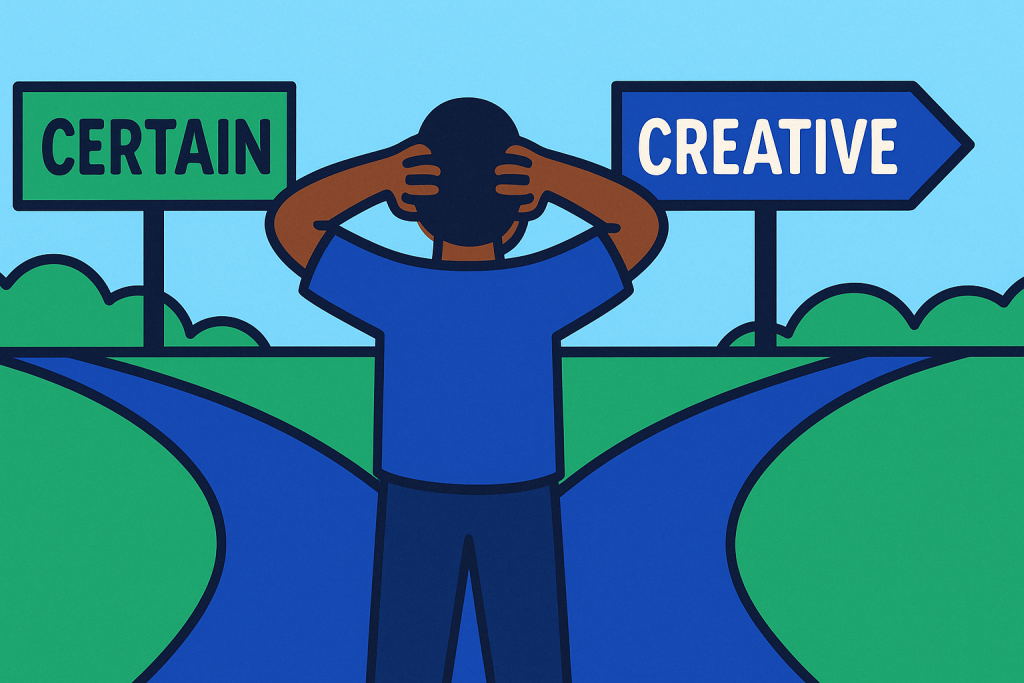
We’ve talked about “I can’t” (definitive, shutting down possibilities) and “Perhaps I can” (open-ended, inviting exploration). Now we add a third perspective: “I know I can do it this way.” Each mindset shapes your resourcefulness and perseverance differently.
- “I can’t”: No resourcefulness, no perseverance. Final stop.
- “Perhaps I can”: High resourcefulness, some perseverance—room to grow.
- “I know I can (only) do it this way”: High perseverance, but low resourcefulness—less flexibility to find alternative solutions.
?Key Takeaway:
You can visualize these differences on a two-dimensional chart (Resourcefulness vs. Perseverance).
Chart of Perseverance
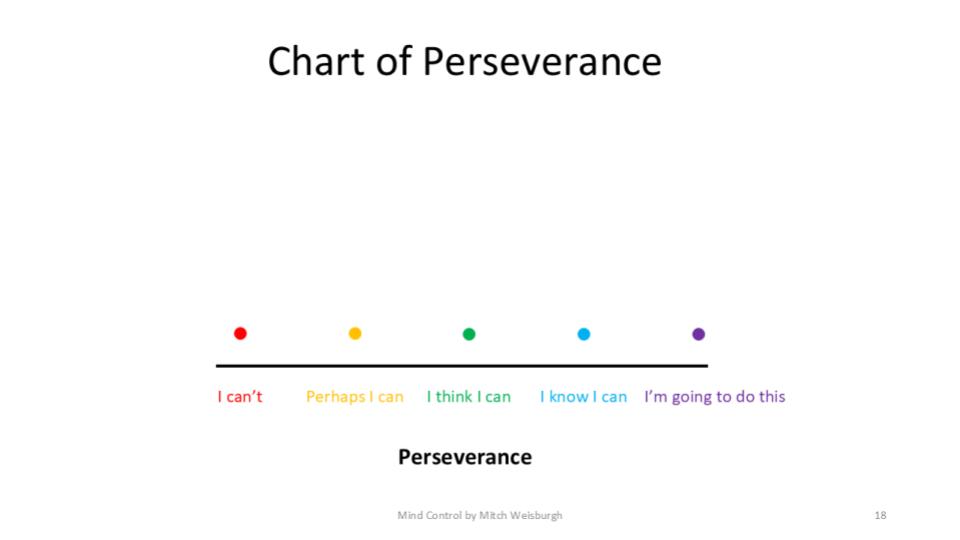
As you change the voice from “I can’t” to “perhaps I can” you are opening up possibilities in your mind. The words “I can’t” are certain. And so are the words, “this is what we have to do.” or “Here is how I’m going to do this.”
Sometimes you are sure you can’t do something, and sometimes you are sure you know exactly what to do. Maybe you started off with something that you thought you couldn’t do, and you responded “Perhaps I can,” and then maybe you progressed and heard that voice, “I think I can”. And eventually “Yes, I can, I absolutely can, and I will.”
Cognitive science tells us that the closer you get to, “I know how to do this” the more commitment and persistence you have to that task, like this:
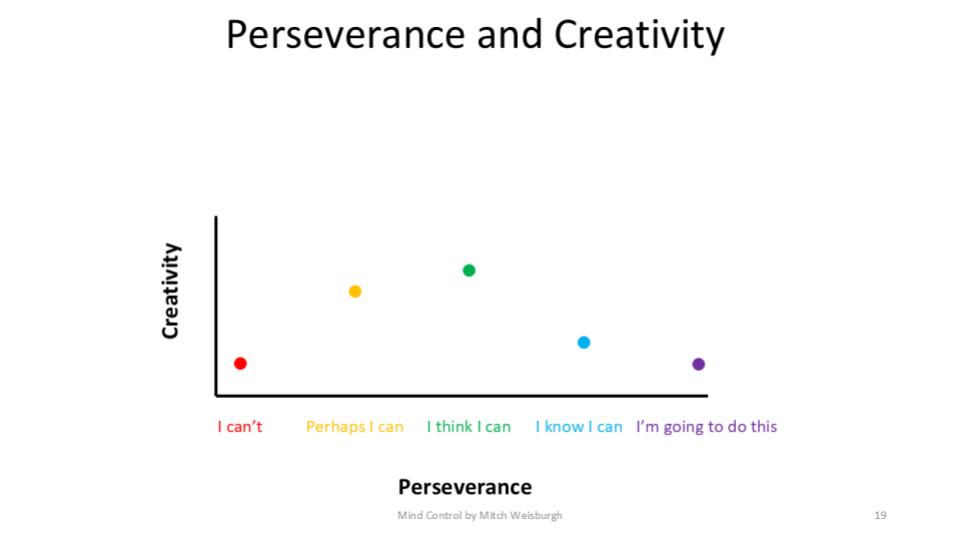
Perseverance and Creativity
Your perseverance increases the more definite you are to yourself that you are going to do something. But on the other hand, as you move from possibility to commitment, you also change your ability to be creative or flexible, and if you plot creativity and perseverance, it looks more like this:
When you are sure you can do something, how open are you to thinking about other ways of doing it? How open are others to alternative suggestions when they are sure that they know how to do something?
In other words, you are at your peak of being creative, or finding and evaluating different ways of doing something when you are thinking “Perhaps I can” or “I think I can”. And then once you start thinking “I know I can” or you commit “I’m definitely going to do this” you actually are less resourceful; more persistent, but less resourceful.
Three Key Points on the Chart
- “I can’t”
- Low Perseverance, Low Resourcefulness.
- You’re certain you can’t, so you neither try different approaches nor keep going.
- “Perhaps I can”
- High Resourcefulness, Moderate Perseverance.
- You’re open to ideas and prepared to attempt them, though you’re not 100% certain you’ll succeed.
- “I know I can (only) do it this way”
- High Perseverance, Low Resourcefulness.
- You’re determined, but you see no need to consider alternative methods.
Why This Matters
When we are sure, we are not creative and we are not open to exploring alternatives or to suggestions. The human mind looks for certainty, so we do often jump to conclusions or plans, we become certain we can’t do something or certain we know exactly what to do.
If we can stay in that “perhaps I can” or “I think I can” mindset longer, we can often find much better options that whatever we were willing to jump to initially.
? Whenever you are sure, that’s a sign that maybe you should ask yourself some questions to reopen your mind, such as:
- Could there be another way?
- What if I couldn’t do it that way, what would I do?
Why It’s Not So Simple
- “I can’t” is an absolute barrier—no exploration, no confidence.
- “I know I can do it” is total confidence—but zero curiosity for better ways.
- You can’t skip “Perhaps I can,” because you need a stage where your brain explores possible solutions and starts building some perseverance.
Example

- If you truly believe “I can’t run 5 miles,” you won’t leap to “Yes, I can definitely run 5 miles tomorrow!”
- But instead of leaping from “I can’t run 5 miles” to a specific plan, a better first step is to simply say:
“Perhaps I can.”
That gentle shift invites your brain to start brainstorming possibilities—without triggering resistance or fear. You don’t need to jump straight to “jog 1 mile” or “train for a 5K.” Just saying “Perhaps I can” opens the door to curiosity, creativity, and small next steps.
Confidence runs on a spectrum from "I can't" to "I know I can" – and creativity doesn't peak where you'd expect. Type each answer, then check it.
Creativity peaks at "Perhaps I can," not at full certainty. Certainty buys perseverance but quietly blocks creative and critical thinking.
Interactive Activity
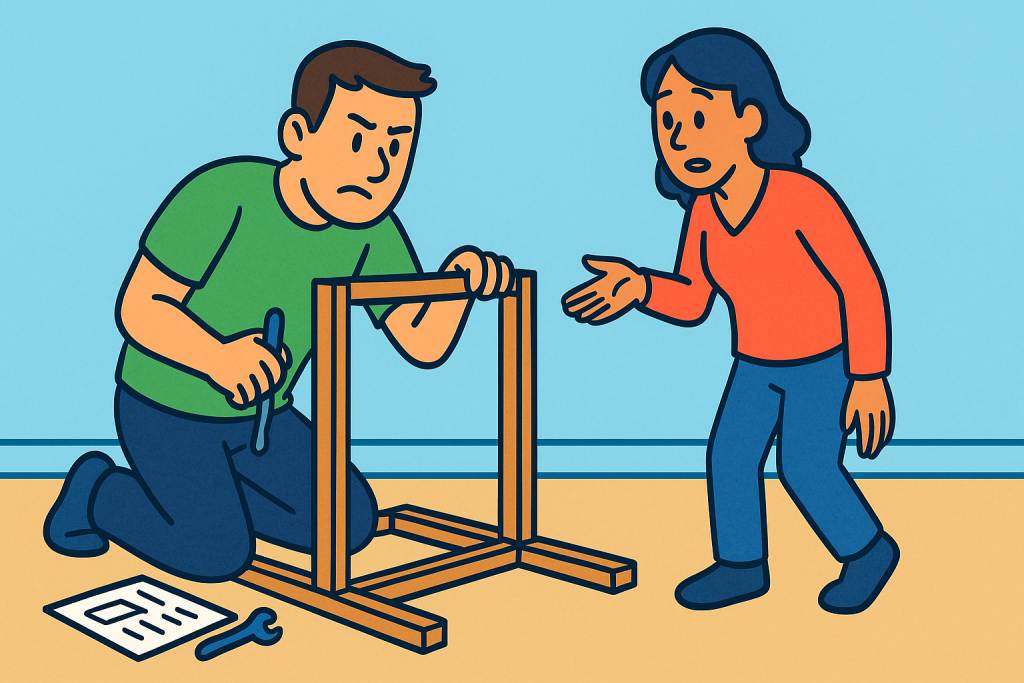
When You’re Sure You know
When you feel absolutely certain—“I know how to do this”—you might stop listening, stop experimenting, and tune out alternatives. This is where confirmation bias often kicks in.
Confirmation bias is your brain’s tendency to look for information that supports what you already believe—and ignore or downplay anything that contradicts it.
So, if you’re sure your method works, your brain may filter out better ideas, new research, or creative input from others—even if they could improve your outcome.
The result? Resourcefulness plummets.
Why take risks, reflect, or explore, if you believe you already have the solution?
The “Sage brain” (your prefrontal cortex) thrives on curiosity and openness. Certainty closes that door.
Lost Innovation
People who cling to certainty—whether it’s “I can’t” or “I know I can only do it this way”—often miss out on creative, efficient, or even easier alternatives.
But why do we hold so tightly to certainty?
Because uncertainty can feel uncomfortable. As humans, we’re wired to crave clarity and control. Certainty feels safe. Uncertainty can feel like danger. And when our brain senses danger, even social or emotional discomfort, it reacts limbically—fast, emotional, protective.
The truth is, both “I can’t” and “I know I can” are certainty statements. They close off exploration. They give our brain something definitive to latch onto, even if it’s limiting.
In contrast, “Perhaps I can” is a statement of uncertainty—and that’s exactly where the magic happens.
The moment you say, “Perhaps I can,” you aren’t committing to anything. You’re simply holding open the door for your more resourceful, reflective mind to get involved. You’ve left the world of fixed answers and stepped into what’s often called a liminal space:
Liminal space is the in-between—the space between what was and what could be. It’s uncertain, but also full of possibility.
It’s in this space that creativity, innovation, and personal growth thrive.
? So when your limbic brain reacts to uncertainty with discomfort, try this instead:
- Stay there, just a little longer. Don’t rush to a conclusion.
- Get curious.
- Let your discomfort signal that you’re in a space where something new is possible.
Over time, the more you practice staying in this space, the more comfortable and capable you become. That’s part of what MindShifting is all about—developing the emotional flexibility to remain open, even when your brain wants to shut the door.
? Interactive Exercise
Instructions: Reflect on your own traits of perseverance and resourcefulness by sorting scenarios into the correct places on the chart.
Background: In everyday life, statements like “I can’t” or “I know I can” may sound final. They give certainty but can also close the door to new approaches. On the other hand, “Perhaps I can” keeps possibilities open. This is the space where creativity and growth happen.
Your Task:
Look at the four character scenarios.
-
Drag and drop each gray box onto the right quadrant in the Resourcefulness–Perseverance Chart.
-
After placing them, take a moment to reflect: Where would you place yourself on the chart in a current challenge?
? AI Mentor Interaction: “When Certainty Blocks Creativity”
Goals
We all have things that we are sure we know how to do. You may have tasks that you will be working on by yourself or with others and you are positive on exactly what you or they have to do. And earlier, we explored at least one challenge that you were sure you would not be able to do.
In this conversation, you will think about some task or challenge you have to do, either in the next day or so or even long-term, where you are positive that you either know what to do or that you cannot complete. Once you have that task in mind, Coach Robbi will help you access your own critical thinking and creativity to open your mind up to other possibilities.
Instructions
Talk with Coach Robbi about situations where you’ve felt blocked by certainty—whether it’s the certainty of “I can’t” or “I already know how.” You’ll examine how your brain reacts to pressure and explore softer approaches that reduce resistance. This is not about arguing with yourself—it’s about discovering mental moves that work with your brain, not against it.
- Prompt: Recall a situation where you told yourself either “I can’t do this” or “I know how this must be done.”
- Question: How does your brain respond to each of those phrases?
- Action: Try replacing both with “Perhaps I can…” and describe what changes—emotionally, mentally, or physically.
? What You’ve Just Practiced
In this exercise, you experienced how direct confrontation—like arguing with “I can’t”—often triggers resistance. That’s because your limbic system doesn’t like being told it’s wrong. On the other hand, a phrase like “Perhaps I can” invites possibility without provoking defense.
You also saw how certainty—even the positive kind—can limit exploration. The more we allow room for uncertainty, the more resourceful we become.
MindShifting is about gently shifting your mindset, not forcing it. Hopefully this interaction helped you practice exactly that.
? Key Takeaways:
- “I can’t” = No resourcefulness, no perseverance.
- “Perhaps I can” = High resourcefulness, moderate or growing perseverance—ideal stepping stone.
- “I know I can (only one way)” = High perseverance, low resourcefulness—risk of missing better solutions.
- You can’t jump from total negativity to total certainty—“Perhaps I can” is a necessary bridging mindset.
Next Steps in MindShifting
- Watch other people when they say they can’t or when they seem to be sure that there is one way to do something. How certain are they and how open are they to other possibilities.
- Practice self-awareness in the things that you are sure of. Ask yourself in those instances if there might be something you are missing, if there might be other possibilities, or what you would do if you knew that you had to find another way.
In the next lesson, you’ll take a closer look at the role of certainty in your thoughts and reactions. You’ll learn how strong, automatic beliefs—like “This is the only way” or “They’re always wrong”—can limit your flexibility and block reflective thinking. By learning to spot these certainty patterns, you’ll open the door to curiosity, adaptability, and deeper understanding.