
2. Understanding Scripts and Stories
Live
Every day, you make countless decisions and take actions—many of them without conscious thought. You might speak up or stay silent, take on a task or put it off, react calmly or flare up. But what determines those choices? Why do some reactions feel automatic, even when they don’t serve us?
The answer lies in the hidden architecture of your mind: the scripts and stories that shape how you respond.
As we have learned from previous modules, a script is an automatic behavioral pattern—something you do without stopping to think. A story is the internal narrative you use to explain what’s happening, why it matters, or what to expect next. You might act and then justify the action with a story. Or you might tell yourself a story that drives your action.
These patterns—often invisible—can guide you, support you, and even protect you. But they can also limit your options, trap you in old reactions, and amplify your inner critic. Especially when they go unexamined.
In this lesson, you’ll dive in to recognize how scripts and stories work, how they may be shaping your behavior more than you realize, and how to quiet them and tap into your own resourceful brain.
Why It Matters
Your brain is constantly trying to save time, reduce effort, and protect you from perceived danger. Scripts and stories evolved to make life easier and safer. And often, they do.
But when a story from the past—like “conflict is dangerous” or “I’m not good at this”—continues to run your behavior in the present, it can block growth and create unnecessary stress. You may act in ways that reflect who you used to be, not who you are today.
When you become aware of these patterns, you create space. Space to choose. Space to grow. Space to challenge the voice of the inner critic that says, “You can’t,” “You shouldn’t,” or “You’ll fail.”
That awareness starts here.
? Introduction & Learning Goals
In this lesson, you will:
- Understand the differences between a scripts and a stories
- Explore why your brain uses these patterns—and when they’re helpful
- Examine how actions and stories relate to each other in real-life situations
- Identify moments where an outdated story may still be influencing your reactions
- Begin building awareness of your own patterns as a foundation for future change
Topics in this Lesson

Have you ever reacted to something before realizing what you were doing—then explained it afterward? Or made a snap judgment about someone or something, and then acted based on that belief?
In both cases, you were likely following an internal script or reacting to an internal story.
Scripts: What You Do Automatically
A script is a patterned behavior your brain runs without conscious effort. It’s fast, efficient, and often developed through repetition or emotional experience. Scripts emerge when the brain finds something that works—especially in situations that feel intense, uncertain, or emotionally charged.
Here are some examples:
- You instinctively shut down when someone raises their voice.
- You smile and say “I’m fine,” even when you’re clearly not.
- You rush to explain yourself the moment someone challenges your idea.
These responses may have once served you. They helped you avoid conflict, stay safe, or feel in control. But over time, they become automatic—and your brain continues to run them, even when they no longer fit the situation.
Stories: What You Tell Yourself to Make Sense of It
A story is the narrative your mind creates to explain what happened—or to predict what might happen next. Stories are how your brain makes meaning out of complexity. They help you answer questions like: “Why did I do that?”, “What does this mean?”, or “What will happen if I try?”
Stories are powerful. They don’t just explain your actions—they shape your future behavior.
For example:
- “I shut down because they don’t respect me.”
- “If I speak up, I’ll just make things worse.”
- “People always misunderstand me.”
- “I need to prove I’m not weak.”
Whether those thoughts are accurate or not, they feel true in the moment. And because they feel true, they guide what you do next.
Stories are always simplifications of reality. They’re not the full picture—but your brain leans on them because they offer clarity and certainty in complex or ambiguous situations.
Two Paths, One Pattern
You first encountered the difference between scripts and stories in Module 2, where you explored how internal patterns shape your responses. In this lesson, you’ll revisit that distinction through practical examples.
Sometimes you act first, then explain the behavior. Other times, you tell yourself a story that shapes what you do next.
In both cases, these patterns often run without your awareness. That’s why they’re so powerful—and why learning to spot the difference is a key step toward change.
Example 1: Acting Before Thinking
You snap at a colleague in a meeting, then later think, “They always interrupt me—I had to speak up.” That’s a script (the outburst), followed by a story (the justification).
Example 2: Story Driving Action
You’re about to give a presentation and think, “They’re going to see right through me—I’m not qualified for this.” That story drives your action: you rush, lose confidence, and avoid eye contact. The script follows the story.
Why It Matters
If you don’t realize you’re operating from a script or story, you have no choice—you’re on autopilot. But when you can pause, name the pattern, and bring it into awareness, you open up new possibilities. You can shift the story. You can interrupt the script. You can respond instead of react.
? Key Takeaways
- A script is an automatic action; a story is the explanation that justifies or drives it.
- Stories help you make sense of a situation quickly—but they are always simplifications.
- Scripts and stories often run outside of awareness, shaping your behavior before you realize it.
- Recognizing the difference between the two is the first step toward changing patterns that no longer serve you.
It’s easy to see how scripts and stories can limit us—especially when they lock us into habits that no longer fit our lives. But before we begin to challenge them, it’s essential to recognize why they exist in the first place—and why your brain relies on them so heavily.
You explored this idea in Module 2, where you learned that scripts and stories aren’t flaws—they’re features. They evolved to help your brain process information quickly, reduce uncertainty, and respond efficiently in a world filled with dangers.
In this lesson, we’ll revisit that concept and begin to look more closely at when these patterns help—and when they start to hold you back.
Your Brain Can’t Afford to Think About Everything
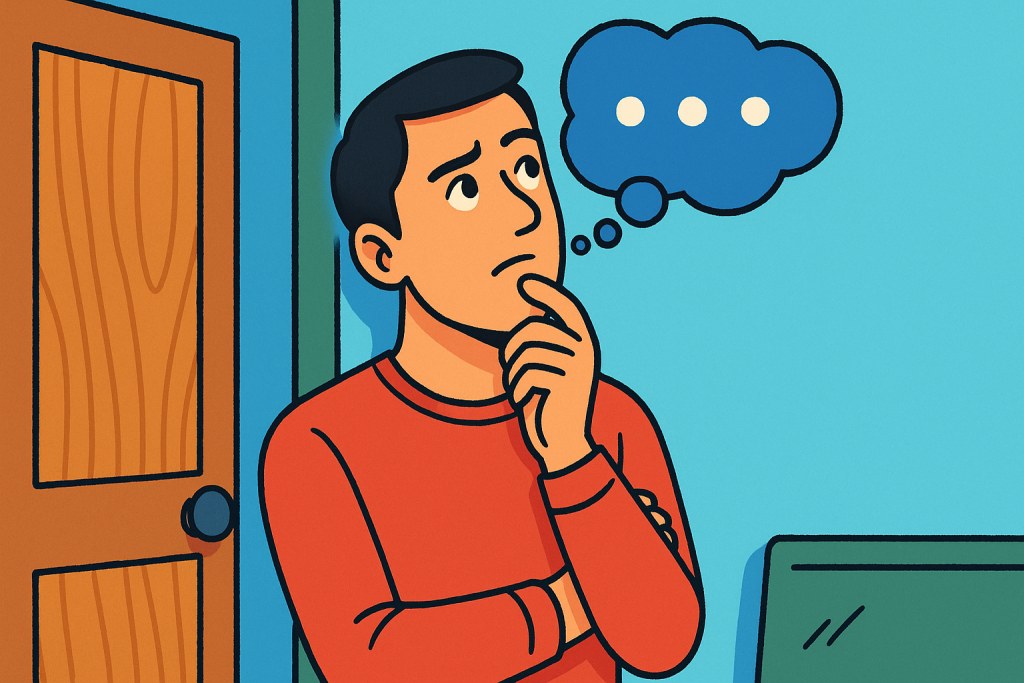
Every second, your brain is flooded with input. Sights, sounds, smells, emotions, thoughts, social signals, internal sensations. If you had to consciously process all of it, you’d freeze.
So your brain takes shortcuts:
- Scripts tell you what to do.
- Stories help you make sense of it.
These shortcuts free up energy for more complex or unfamiliar situations. You don’t have to relearn how to tie your shoes or question your role in every conversation. That’s not laziness—it’s efficiency.
Scripts: Time-Tested Efficiency
A well-rehearsed script allows you to act automatically:
- You greet a friend without pausing to choose your tone.
- You get in the car and start driving a familiar route.
- You brush your teeth while thinking about something else entirely.
The script runs the action. No mental load required.
This is powerful. In fact, the better you are at a skill, the less you consciously think about it. Musicians, athletes, emergency responders—anyone who operates under pressure—train their brains to rely on scripts. It’s what allows performance to flow, even under stress.
Stories: Coherence in Chaos
While scripts automate behavior, stories organize your experience. They let you answer questions like:
- “Why did that happen?”
- “What does this mean?”
- “What should I expect next?”
You don’t like uncertainty. Your brain would rather have a simple explanation than sit with confusion. Stories provide that explanation—even if it’s incomplete.
Stories protect your identity, maintain emotional balance, and give you a narrative through-line in a world that doesn’t come with one.
Why This Becomes a Problem
Scripts and stories work well—until they don’t.
- A script that once protected you in childhood may limit your confidence in adulthood.
- A story that helped you understand rejection (“I’m just not good with people”) might close you off from connection later on.
- The same shortcut that saves time can become the reason you don’t grow.
The challenge is not that these patterns exist—it’s whether they are still serving you.
? Interactive Exercise: “Scripts and Stories”
Instructions: Please read each question carefully and choose the option that best answers it. Each question has only one correct answer. Take your time and answer to the best of your understanding.
? Key Takeaways
- Scripts and stories evolved to help your brain manage complexity and conserve energy.
- Scripts automate behavior—especially in familiar or high-stakes situations.
- Stories provide meaning, protect identity, and simplify emotional complexity.
- These tools are beneficial—but they can also outlive their usefulness.
- Growth begins with asking not “Is this wrong?” but “Is this still helping me?”

When something happens—a challenge, a surprise, a comment—do you first think through your response, or do you act before your thinking brain even has a chance?
The answer is: both. But not in equal measure.
Your brain has two primary modes for responding to the world:
- The limbic system, which acts quickly and emotionally, based on past patterns and perceived threats.
- The prefrontal cortex, which reflects, analyzes, and imagines possibilities.
In most situations, your limbic brain activates first. That means your actions often begin before your thinking brain even gets involved. But sometimes the sequence changes—and becoming aware of that difference is a powerful step toward shifting old patterns.
Let’s look at three common sequences.
1. You Act Without Thinking
Imagine this: You’re driving, and someone cuts you off. Without hesitation, you yell or gesture. There was no reflection, no pause. Your reaction came straight from your limbic brain—fast, emotional, automatic.
This is a pure script. Your brain registered a threat, and the response fired instantly.
In this case, action comes first—and no story is needed. The brain’s focus was protection, not meaning.
2. You Act, Then Come Up with the Story
Now imagine this: You interrupt someone in a meeting, speaking over their point. Later, someone asks you why you did that. You pause, reflect, and say,
“Well, I just wanted to make sure my idea was heard.”
In this case, your action happened first—likely out of habit or urgency. The story came later, either because someone asked for an explanation or because your thinking brain kicked in after the fact to justify what happened.
This is common. Your prefrontal cortex arrives late and tries to make sense of what the limbic brain already did.
Sometimes, the story is accurate. Other times, it’s a convenient fiction your brain creates so the world feels coherent.
3. You Perceive a Situation, Access a Story, and Then Act
In this final scenario, your brain doesn’t jump straight to action. Instead, you see a situation, interpret it, and then respond based on the narrative already running in your mind.
Example: You’re about to pitch an idea in a team setting. You notice a colleague frowning. Instantly, a story surfaces:
“They think my idea is terrible.”
As a result, you hesitate. You water down your suggestion or skip it entirely.
Here, the story came first, and the action followed. Your brain accessed a belief—possibly rooted in past experiences—and that belief shaped your behavior.
This type of sequence is especially common when your brain is trying to avoid judgment, risk, or rejection.
Why This Matters
You don’t have a single way of responding. Your mind runs flexible, dynamic sequences that depend on context, mood, and memory. But the more you learn to notice which pattern you’re following, the more power you have to interrupt it.
When you pause and say,
“Wait—is this a reaction or a decision?”
you’re activating your prefrontal cortex—the part of the brain that can shift your course.
? Interactive Exercise: Three Paths in Practice
Instructions: This exercise explores three ways your brain can respond to situations: reacting automatically, acting before thinking, or responding based on a story. Read each question carefully and choose the option that best describes the pattern.
? Key Takeaways
- Your brain doesn’t always think before acting—especially when emotion or habit takes over.
- In some cases, you act without thinking. In others, you explain the action afterward.
- Often, you act based on a story that already exists in your mind.
- Recognizing which sequence you’re in allows you to pause, reflect, and choose differently.

Stories help you make sense of the world. They organize your experiences into meaning: what’s safe, what’s important, who you are, and what you’re capable of. In this way, stories aren’t just reflections of your beliefs—they shape your actions.
But stories don’t always age well.
Some stories were useful when you first adopted them—especially in childhood or high-pressure environments. They helped you feel safe, accepted, or in control. But as life changes, those same stories can become invisible limits. You keep following them, not because they’re true, but because they feel familiar.
When a Story Becomes a Cage
Psychologist Mihaly Csikszentmihalyi noted that while our consciousness is designed for flexibility and growth, we often operate in fixed mental patterns that are no longer adapted to our reality. We live according to “mental routines” shaped by earlier needs—and we rarely pause to ask whether those needs still exist.
Take this example:
As a child, you were told: “Don’t talk back. Stay quiet when adults are speaking.”
That may have kept you safe or respectful in your home. It was a story: “Speaking up is risky.”
Now, imagine you’re in a leadership role. A big decision is being made, and you disagree—but you hesitate. You feel tension in your chest. Your story whispers: “It’s not worth the risk.”
That childhood rule, meant to protect, now silences your voice. The story hasn’t changed even though both the situation and you have.
The “Conflict Is Bad” Story
One common outdated story is:
“Conflict is dangerous and should be avoided.”
Maybe that story helped you survive tense family dynamics, a strict school, or unstable friendships. You learned that staying neutral or silent was safer than speaking up.
But today, that same story can block collaboration, growth, and authenticity. Avoiding conflict might mean avoiding the truth. Or failing to set boundaries. Or suppressing your creativity.
Let’s consider a different version.
When a New Story Unlocks Growth
Imagine a team where two colleagues strongly disagree on strategy. One sees the risk; the other sees the opportunity. They could walk away frustrated, each thinking, “This will never work.”
But instead, they stay curious. They talk openly. They ask questions. The tension becomes fuel. Out of disagreement comes a better solution—one neither would have discovered alone.
In this case, conflict wasn’t bad—it was necessary.
They weren’t locked into an old story. They created a new one:
“Differences lead to stronger ideas.”
Choosing a Story that Grows with You
You don’t have to discard every story from your past. But it’s worth asking:
- Does this belief reflect who I am now?
- Is this still keeping me safe—or just keeping me small?
- What’s a more flexible or empowering version of this story?
Just like habits, stories can be revised. Not by force—but by awareness and choice.
? Interactive Exercise: Outdated Story, Updated Life
Instructions: This exercise invites you to notice how old beliefs may still influence your actions—and how new, more flexible stories can support growth. For each question, consider what the examples reveal about story patterns and their impact. Select the one answer that best captures the key idea in each case.
? Key Takeaways
- Stories often form early—helping us feel safe, accepted, or in control.
- Over time, those same stories can become invisible barriers to growth.
- Beliefs like “conflict is bad” may have been useful once, but can now lead to avoidance or silence.
When updated, stories can unlock confidence, collaboration, and change.
? AI Mentor Interaction: “That Old Rule Doesn’t Fit Anymore”
Goals
This conversation is designed to help you recognize how early life messages—rules, expectations, or lessons—can turn into lasting internal stories. You’ll practice noticing which of those scripts might still be running in your life, and whether they still serve you. By reflecting on these early instructions, you’ll explore how they may have shaped your behavior, and consider how to revise them for the person you are today.
Instructions
Think back to something you were told or taught when you were younger—something you followed as a rule or internalized as truth. It might have come from a parent, teacher, coach, or cultural expectation. What was that instruction or belief?
Now consider:
- Does that story still affect how you think, speak, or act today?
- If not, is there another story from your childhood that still shapes your current scripts?
If a story comes to mind:
- How does it influence your current behavior?
- In what situations does it show up most strongly?
Now imagine updating that story:
- How could you reframe or modify it so that it supports your growth now?
- What would be a wiser, more compassionate version of that belief—one that matches who you are today?
When you’re done, Coach Robbi will acknowledge your insight and progress.
? What You’ve Just Practiced
You explored how early life messages can become lasting stories—and how those stories can quietly shape your reactions, habits, and identity. By identifying a belief from your past and considering its present-day effect, you practiced a key MindShifting skill: conscious narrative revision. You’re not locked into old scripts. By choosing which stories to keep—and which to evolve—you just reclaimed a bit more freedom and self-authorship.
Well done.
You’ve just taken your first full step into the architecture of your own mind.
In this lesson, you explored how much of your behavior—what you do, avoid, believe, or explain—can be traced back to patterns your brain developed to save time, stay safe, or make meaning. You now know that:
- Scripts are automatic behaviors—fast, practiced responses that your brain runs with little conscious effort.
- Stories are internal narratives—simplifications your mind creates to explain what’s happening or to guide what should happen next.
You looked at how:
- Some responses come before thinking.
- Sometimes we justify our actions after the fact.
- And other times, we act based on a story we didn’t even realize we were carrying.
You also saw that not all stories stay helpful forever. What once protected you may now limit you. But when you notice that, you gain the power to shift—gently, wisely, and on your own terms.
? Key Takeaways
- Scripts and stories are mental shortcuts that help us respond quickly in a complex world.
- These patterns save effort and create stability—but they can also become invisible limits.
- Noticing whether you act first, explain later, or act from a story helps build self-awareness.
- Stories that once served you may no longer be relevant. You can update them.
- Awareness is the first step toward freedom from your inner critic.
Next Steps in MindShifting
Next, you’ll go deeper into the origins of these patterns. Where do they come from? How are they reinforced? And what does it take to start writing new ones?
You’re doing more than learning—you’re unlearning. Let’s keep going.