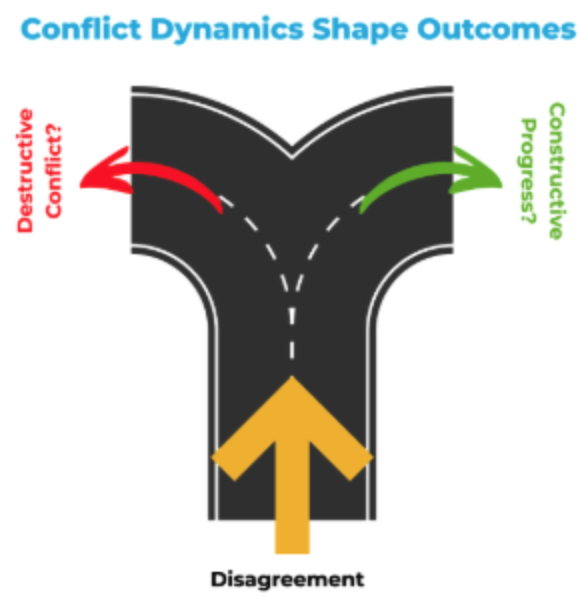
Why Some Disagreements Strengthen School Initiatives—While Others Derail Them: How Conflict Dynamics Shape School Culture
Imagine rolling out a new district-wide Learning Management System (LMS). The goal is clear and highly beneficial: to have one centralized platform for assignments, content, assessments, data, and communications. You present the vision, and it seems like everyone is on board.
But within weeks, the resistance begins. Teachers are skipping the training sessions or constantly needing “tech support” for basic functions. Behind closed doors, they are still giving kids paper assignments instead of posting to the LMS. They gripe to each other in the breakroom, and your analytics show the system is vastly underutilized.
This isn’t a technology failure; it’s a conflict dynamic. When faced with the stress of a major initiative, people’s brains naturally perceive the change as a threat, shifting them into a protective survival mode. Some staff will display open intransigence, pushing back aggressively. Others will simply avoid the issue by dodging meetings. Perhaps the most frustrating are those who engage in “fake accommodation”—nodding along in staff meetings out of fear or “limbic appeasement” to satisfy leadership, but keeping their classroom doors shut and doing exactly what they’ve always done.
The Five Conflict Styles
To stop these derailments and turn resistance into forward progress, leaders must understand that both the people we lead—and we ourselves—approach disagreements through five fundamental conflict styles. These styles sit at the intersection of assertiveness (pursuing your own goals) and cooperativeness (working with someone else’s goals).
There is no “best” style. Problems only arise when individuals get stuck using their default style unconsciously, operating from their reactive, survival brain rather than their thoughtful “Sage” brain.
- Compete (High Assertiveness, Low Cooperativeness) This is the “we’re doing it my way” approach. It is decisive, forceful, and focused on achieving one’s own outcome.
- When it works: During emergencies or chaotic moments, when a non-negotiable deadline requires clarity and speed over debate.
- When it backfires: When used to force buy-in. Overusing it creates fear, damages relationships, and shuts down the dialogue needed for long-term cooperation.
- Avoid (Low Assertiveness, Low Cooperativeness) This is the “I’d rather not deal with this” approach. You sidestep the conflict, change the subject, or step away.
- When it works: When tensions are too hot and people need time to cool down, or when the issue is trivial.
- When it backfires: When the issue is important. Ignoring the teachers who refuse to use the LMS doesn’t keep the peace; it breeds resentment and guarantees the initiative will fail.
- Accommodate (Low Assertiveness, High Cooperativeness) This is the “whatever you want is fine” approach.
- When it works: When preserving the relationship matters more than the outcome, or when you realize the other person actually has a better idea.
- When it backfires: When it stems from “limbic appeasement.” If staff are just pleasing leadership out of fear or survival mode, it leads to resentment, burnout, and zero actual change in their behavior.
4. Compromise (Medium Assertiveness, Medium Cooperativeness) This is the “let’s split the difference” approach. Everyone gets something, but nobody gets everything.
- When it works: When you need a quick, pragmatic solution to keep momentum going.
- When it backfires: When complex problems require true innovation. Compromise often results in shallow solutions where nobody is fully satisfied.
- Collaborate (High Assertiveness, High Cooperativeness) This is the “let’s figure out something that works for both of us” approach. It is the most cognitively demanding style because it requires empathy, exploration, innovation, and patience.
- When it works: For complex, multilayered issues requiring long-term, innovative solutions. It creates deep investment from everyone involved.
- When it backfires: During urgent or simple situations where there isn’t time for a committee. Importantly, collaboration will also backfire if the other party is out of their thinking brain; if someone is using the “Compete” style and is only concerned with their own benefits, your attempts to collaborate will fail.
Choosing Your Approach is Only the First Step
The most effective school leaders don’t just pick one favorite style. They understand their own tendencies, recognize the styles their staff are using, and consciously choose the right approach for the moment.
However, consciously choosing your approach is only the first step. Once we understand when and where to use the different approaches, we have to become proficient and prepared so that we are not triggered into win/lose thinking, blame, or anger during the heat of the moment. We will be delving into exactly how to build that proficiency in future articles.
🔗 Related Resources
The book that started it all! Available on Amazon.
You don’t need a conflict‑resolution expert or a new initiative to launch. Everything is built for a non‑expert host: a playbook, icebreakers, a guided conversation arc with questions and timing, troubleshooting tips, and a closing script.