
Learning with Community
K12Leaders is a unified professional learning infrastructure for K-12: a community platform, a course and workshop management system, and a standards-native credential network designed to solve a problem most school systems have learned to live with. Professional learning happens across districts, associations, universities, conferences, and informal peer communities, but the relationships, records, and evidence of that learning typically scatter across calendars, spreadsheets, PDFs, emails, and vendor silos. District leaders cannot see the full picture of what educators are learning or what professional development investments produce. Providers struggle to extend program value beyond a single event. Educators lose the continuity of their professional record each time they change roles, schools, or districts. We’ve seen this pattern repeat across hundreds of implementations: the infrastructure never matches the ambition.
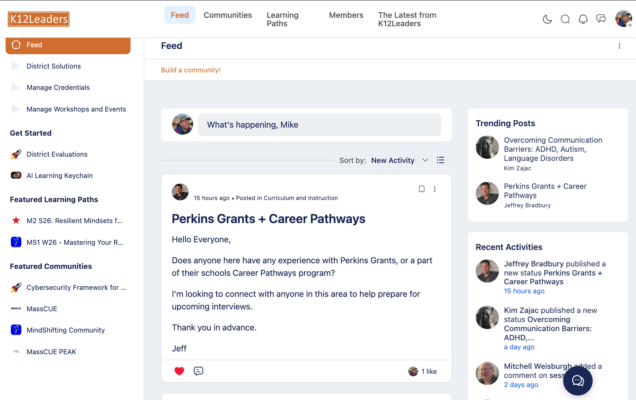
Community Makes the Difference
The community platform creates an education-focused network where professional learning communities, district teams, associations, and subject-matter cohorts can collaborate year-round rather than only at isolated events. Instead of treating professional development as something that happens somewhere else and is documented later, K12Leaders places discussion, mentorship, resource sharing, thought leadership, and peer support inside the same environment where professional growth is taking shape. For school and district leadership, that means stronger internal collaboration, more durable communities of practice, and a professional culture that supports retention as much as compliance. For associations and partners, it creates a network of networks where engagement, advocacy, events, and learning pathways continue between conferences and formal programs. We built this after watching too many conference communities dissolve within weeks because there was no infrastructure to sustain them.
Workshop and Course Management
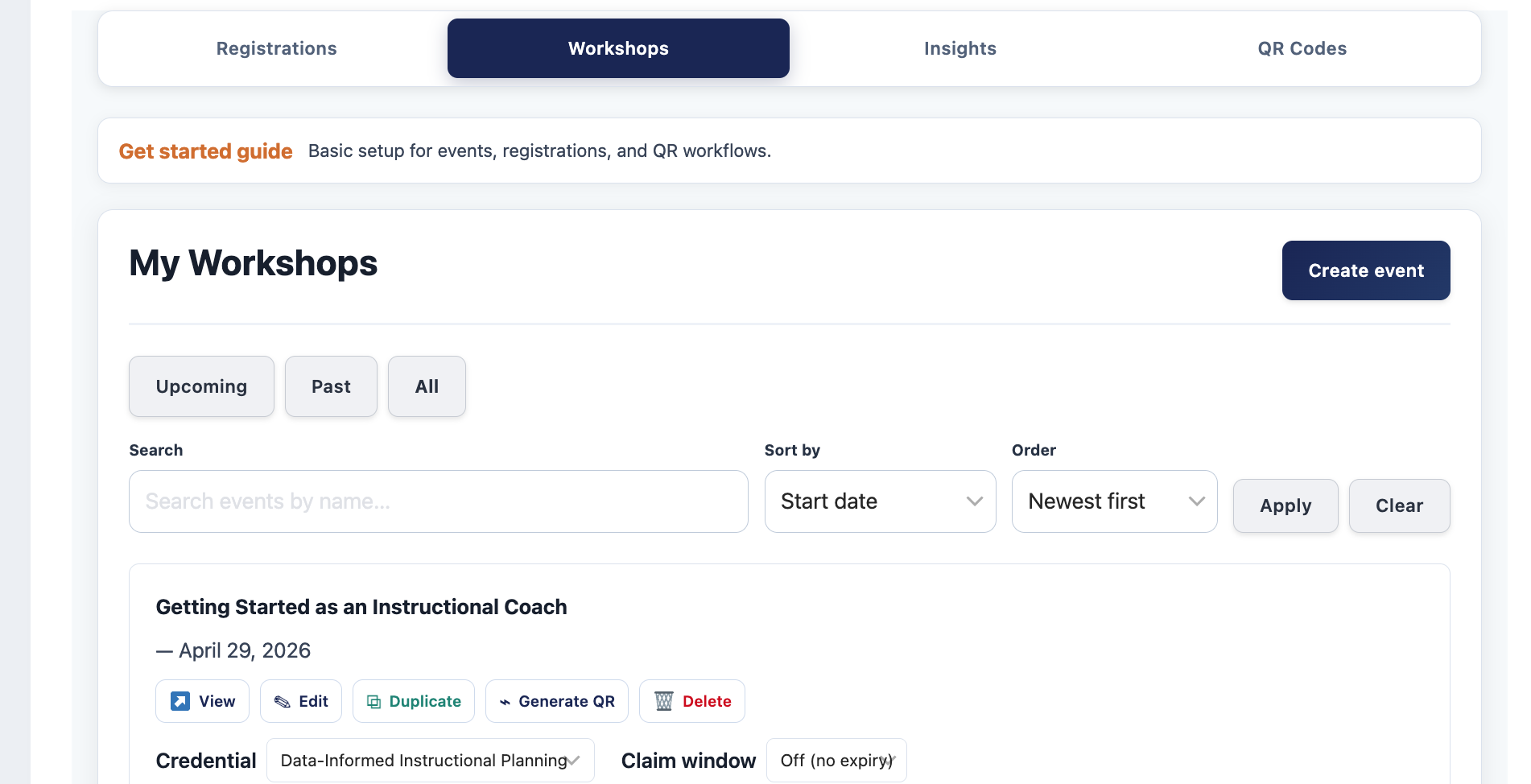
The course and workshop management layer handles the operational work where districts, providers, and associations create learning pathways, manage registration, track participation, verify attendance, and run the full lifecycle of professional learning in one system. Internal workshops, in-service days, online courses, cohort experiences, and conference sessions move from promotion and enrollment through completion and follow-up without requiring separate tools for events, sign-in, certificates, and reporting. This collapses the parallel systems problem that burdens many districts today. Attendance, completion, and participation are captured at the point of learning rather than reconstructed later, giving leadership a clearer view of utilization, program reach, and return on professional development spending. The alternative is what we’ve seen in Pennsylvania and Massachusetts: capable people spending hours reconciling spreadsheets because their systems don’t talk to each other.
Professional Learning Records that Matter
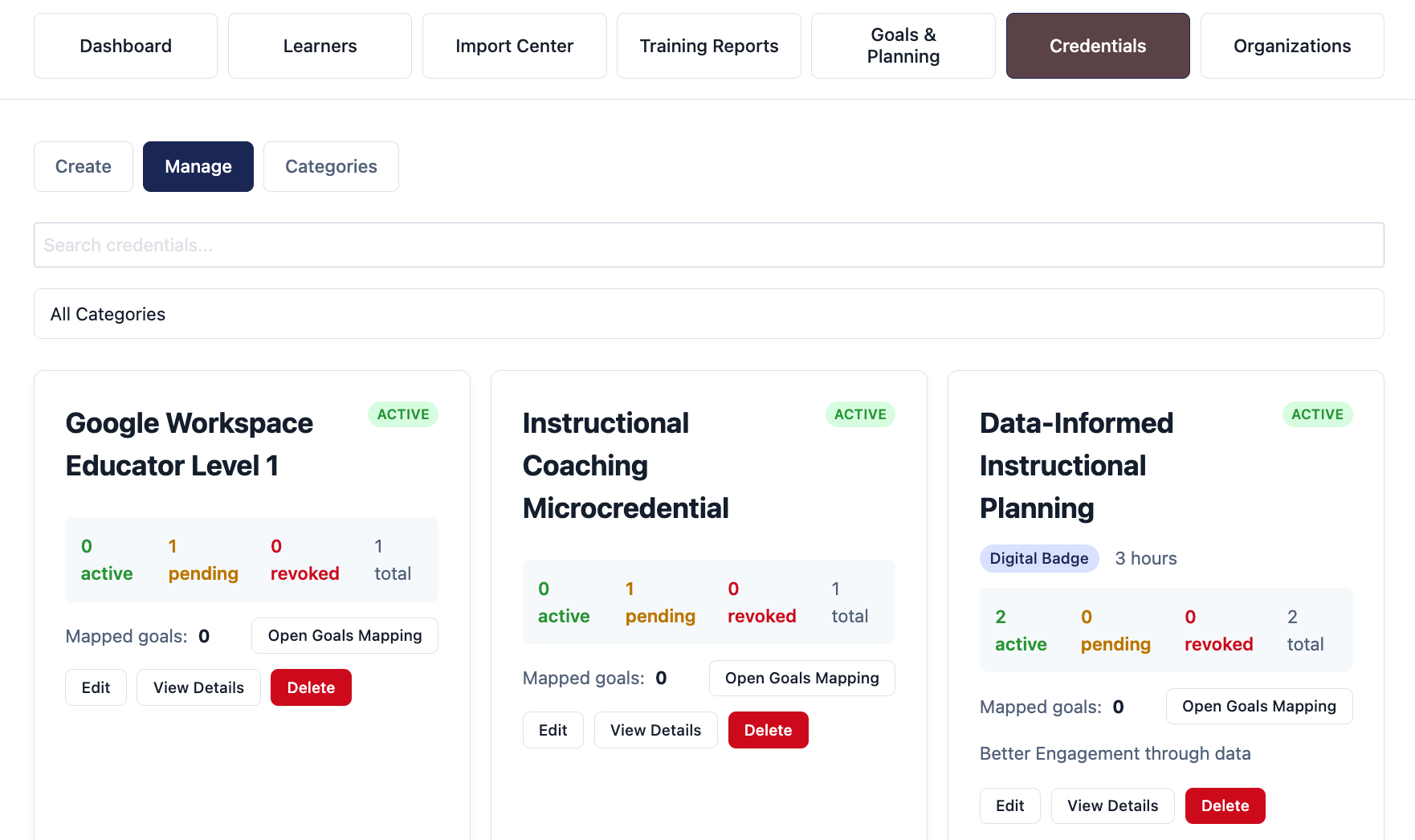
Credalyst is the credential manager that turns those learning experiences into portable, verifiable, educator-owned records. Built as a CEDS-native system with crosswalk readiness for standards including Open Badges, Ed-Fi, SIF, CLR, and xAPI, it functions as learning record store for education rather than just another badge tool. Districts can issue and review credentials through structured workflows, external providers can contribute verified records into the same ecosystem, and educators can maintain a lifelong portfolio that travels with them across schools, employers, and roles. That changes the ownership model: instead of professional history remaining trapped inside the last institution that tracked it, the educator holds a coherent, portable record while districts gain cleaner submissions, lower administrative burden, better audit readiness, and a direct path to state-aligned reporting. We’ve built this on the same interoperability principles we used for Georgia’s EMIS modernization, because credential portability is a data standards problem dressed up as an HR problem.
These three components position K12Leaders as integrated professional learning architecture for K-12 leadership: infrastructure that supports collaboration, manages the operational work of workshops and pathways, and produces verified records that are portable, interoperable, and useful beyond a single event or employer. That gives districts and partners something most current systems do not: a way to connect professional culture, operational workflow, and standards-based data infrastructure in one environment. The long-term impact is better visibility into professional learning, stronger educator mobility and recognition, reduced administrative friction, and a more durable foundation for evidence-based leadership across the K-12 ecosystem. We’re building this because we’ve spent twenty-five years watching good professional development get lost in bad infrastructure, and we know what it takes to fix it.